Interiors
Cottage Goth interiors
Dark rooms, old timber, low light, worn objects and the materials that make a cottage feel lived in rather than staged.
A Cottage Goth room is at its best when the darkness has something to catch on: worn timber, limewashed walls, imperfect glass, iron, wool, linen, pottery, books and furniture that has already had a life.
Old houses come with this texture built in. Newer ones can borrow some of the same depth without pretending to be something they are not.

Begin with what the room is made from
In an old house, the building fabric matters before the paint chart. The Society for the Protection of Ancient Buildings points out that many traditional buildings rely on permeable materials that let moisture move through walls and evaporate. Lime mortar, lime plaster and limewash behave differently from dense modern cement and impermeable coatings.
Before stripping, sealing or tanking an old wall, find out what it is made from and how it has already been altered.
Traditional windows deserve the same patience. Historic England notes that timber and metal windows often contribute through their material, workmanship and proportions; many can be repaired and draught-proofed. Old glass, slender glazing bars and hand-made joinery are hard to put back once they are gone.
Let materials show their age
Waxed timber takes knocks. Brass darkens where hands touch it. Leather creases. Linen softens. Iron gets polished at the latch and dull everywhere else. These small changes are what make a room feel inhabited.
The nicest wear is rarely even. A drawer pull becomes bright in the middle. One edge of a chair is rubbed smooth. Sunlight fades the curtain nearest the window. Floorboards stay darker beneath a rug.
Darkness needs something pale beside it
The memorable dark rooms are not usually black boxes. Deep green walls make old pine, cream linen and copper look warmer. A near-black cabinet has more presence against pale plaster than against another black surface. Lamplight works because there is shadow around it.
Choose where the depth lives — walls, joinery, upholstery, timber or textiles — and leave enough contrast for the room to breathe.

One old object can change the room
A nineteenth-century mirror, a plain dresser, an old stool, a framed engraving, a brass candlestick or a battered cabinet can bring more age than a roomful of factory-distressed accessories.
It is even better when the object still has a job. A cupboard stores things. A basket carries logs. A blanket gets used. A book is read. Nothing needs to sit there solely to prove the room belongs to an aesthetic.
Kitchens have their own mood
Dark cottagecore kitchens have become a strong visual strand of this aesthetic. Pinterest's Spring 2026 report recorded a 915% year-on-year rise in searches for “dark cottagecore kitchen”.
Kitchens are interesting because the mood has to survive real life: worktops, task lighting, pans, bins, water, grease, appliances and somewhere to put the tea towels.

The room guides below move from whole rooms into the details that make them convincing: lighting, paint, textiles, hearths, old furniture and the building fabric itself. Start with whichever part of the house you are actually trying to change.
Sources and further reading
Guides
Explore interiors.

Cottage Goth bathroom
Deep green, old mirrors, brass or chrome, timber and pattern, with materials chosen for steam, splashes and a small room.
Open guide →
Cottage Goth bedroom
A darker bedroom built from deep colour, old furniture, iron, timber, layered bedding and warm light, with sleep and comfort at its centre.
Open guide →
Cottage Goth fireplaces and hearths
Stone, brick, cast iron, tiled surrounds and wood burners — how a hearth gives a dark room warmth, focus and real material weight.
Open guide →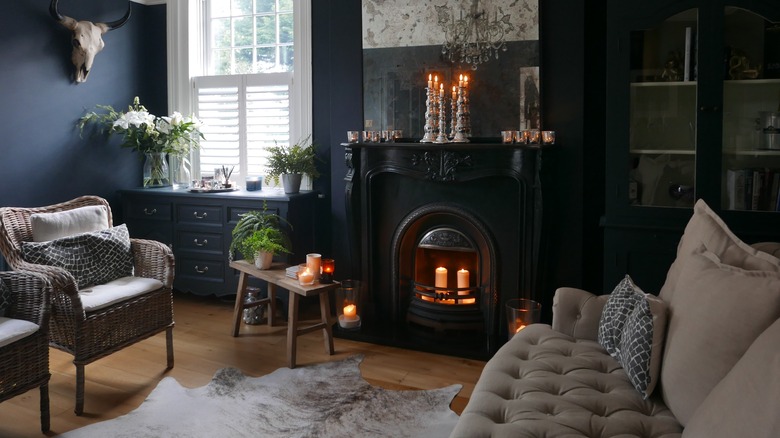
Cottage Goth in a rental
Rugs, lamps, curtains, furniture, art and portable colour — how to make a rented room feel darker and older without pretending you own the walls.
Open guide →
Cottage Goth lighting
Warm bulbs, wall lights, table lamps, opal glass and several small pools of light — how to make a dark room cosy without making it useless.
Open guide →
Cottage Goth living room
How to arrange a dark sitting room around warmth, useful light, comfortable seats, old timber, books and plants.
Open guide →
Cottage Goth paint colours
Forest green, oxblood, aubergine, soot blue, brown-black and warm off-white — how to use dark colour without flattening an old room.
Open guide →
Cottage Goth reading room and library
Bookshelves, a chair worth staying in, warm task light, dark timber and enough quiet detail to make reading the point rather than the styling.
Open guide →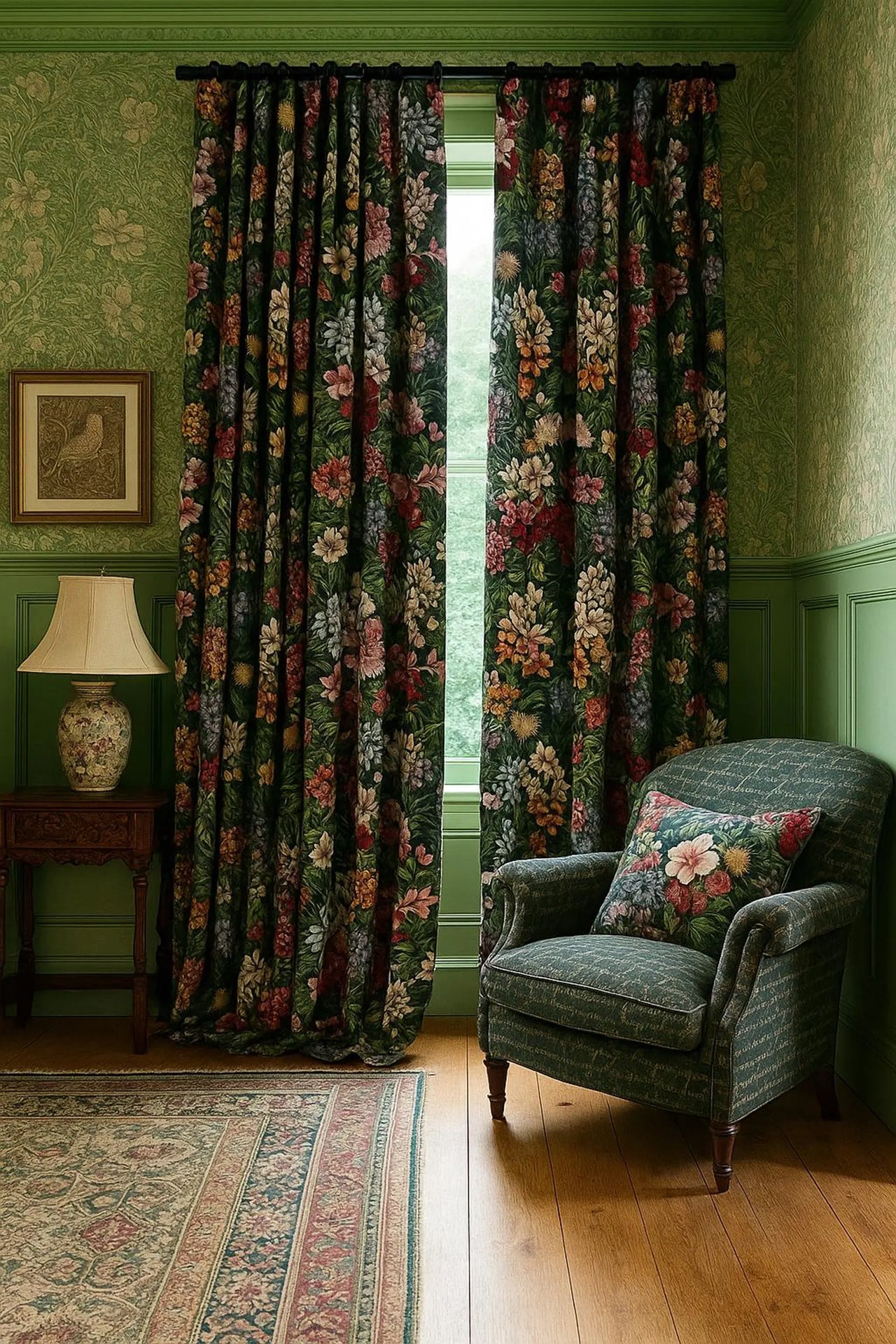
Cottage Goth textiles
Velvet, wool, linen, faded florals, old rugs and useful curtains — the fabrics that make a dark room feel soft, layered and lived in.
Open guide →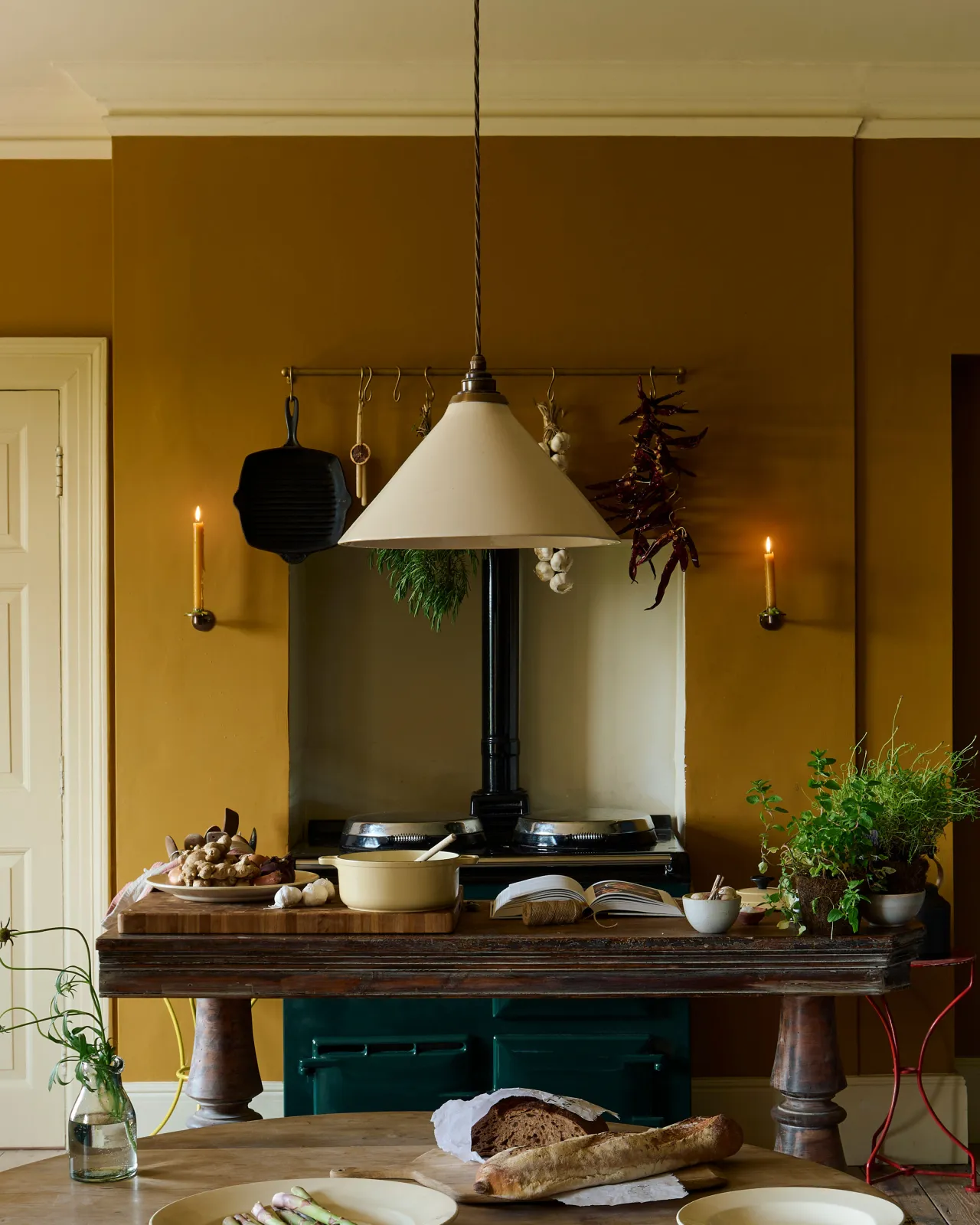
Dark cottagecore kitchens: colour, lighting and materials
A practical guide to deep green cupboards, warm timber, pale stone, aged brass and useful lighting in a working kitchen.
Open guide →
Vintage furniture and mirrors for Cottage Goth rooms
Old chests, chairs, cabinets and mirrors bring genuine age, useful storage and reflected light without filling a room with imitation Gothic furniture.
Open guide →