Textiles are one of the quickest ways to turn a dark room from austere into habitable. Paint changes the envelope; fabric changes how the room feels when you sit down, draw the curtains, walk across the floor or pull a blanket over your knees.
The useful Cottage Goth palette is broader than black velvet. Wool, linen, cotton, tapestry, faded floral prints, crochet and old rugs all bring different surfaces into low light.
Start with one large piece of cloth
Curtains, a rug, a bedspread or a sofa occupy enough area to establish the room. If that large textile already has depth, smaller details can stay quiet.
A dark floral curtain is particularly effective because the pattern disappears and reappears as daylight changes. Greens, oxblood, brown, cream and muted flower colours can sit against deep walls without becoming a theatrical backdrop.
Wool brings the cottage half
Wool blankets, throws and rugs are useful because they are warm in both the literal and visual sense. A rougher weave catches side light and prevents a dark room reading as one smooth surface.
Look beyond perfectly matching sets. Charcoal beside moss, cream beside peat brown, or an old red rug beneath a green chair can feel accumulated rather than styled.
Linen keeps darkness from becoming heavy
Linen is especially useful at windows and on beds. Its visible weave and tendency to crease stop pale fabric looking sterile, while black or deep-green linen remains softer than shiny synthetic cloth.
A room can use dark curtains and pale linen bedding together. Contrast is what lets the darker elements remain visible.

Velvet is strongest in small doses
Velvet absorbs and reflects light at the same time. That makes a green or burgundy velvet chair, cushion or curtain look different from every angle.
A whole room upholstered in velvet can become stagey. One or two substantial pieces are usually enough. Pair them with duller materials such as wool, old timber and linen.
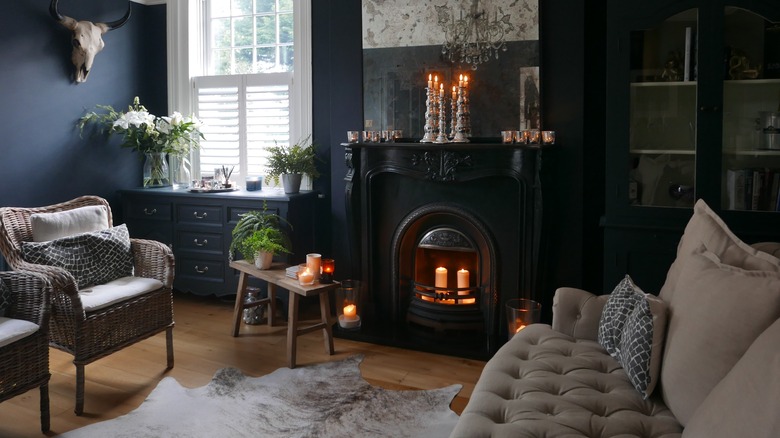
Old rugs are useful because wear belongs on them
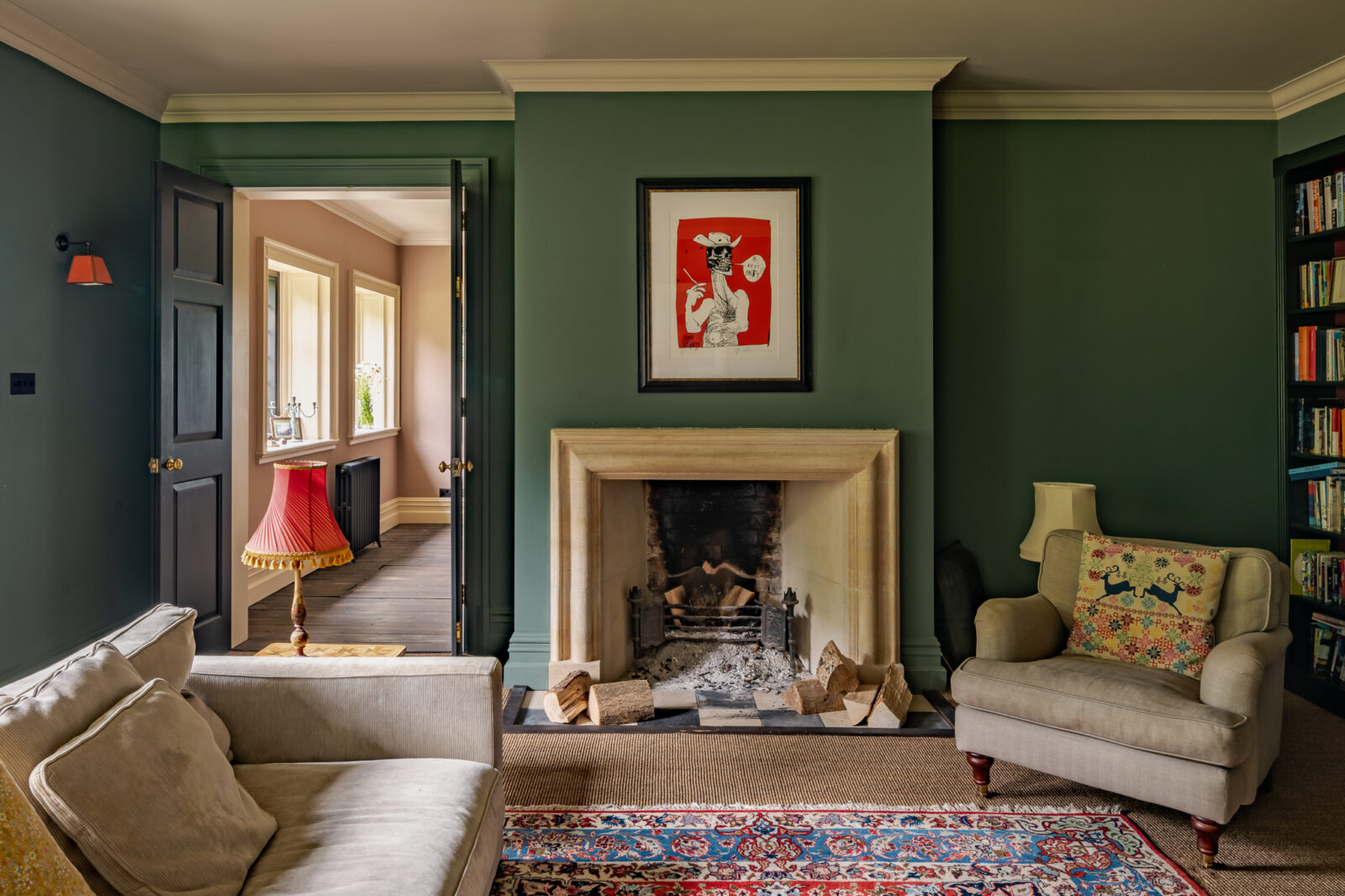
A slightly faded Persian-style rug, kilim or old wool runner introduces colour without asking the walls to do everything. Worn pile and softened colour usually improve the effect.
Measure first. A rug that is too small can make furniture look stranded; one large enough to catch the front feet of chairs and sofa helps turn separate objects into a room.
Florals do not need to be black
A cream ground with faded red flowers, a moss-green tapestry or an old brown botanical print can be more convincing than a purpose-made black rose fabric. The aesthetic comes from the combination of pattern, material and setting.
Buy by material and dimensions, not by aesthetic label
Search for wool blanket, linen curtain, floral tapestry, vintage rug, velvet cushion or crochet bedspread. Those searches tend to produce better objects than “Cottage Goth textile”.
Second-hand is particularly strong here because fabric ages visibly. Fading, repairs and softened fibres can be assets so long as the piece is clean, sound and suitable for the job.


