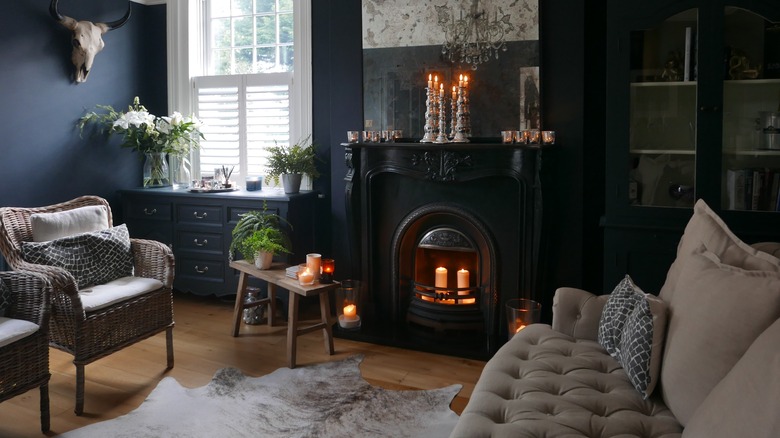
Stone, brick, iron, ash, old tile and moving firelight give a fireplace much of its dark texture and warmth before anything is arranged around it.
That does not mean every room needs a working open fire. A disused hearth, cast-iron surround or small stove can still give the room a centre and a sense of age.
Keep original material visible where you can
Old stone, brick and tile show wear beautifully. Edges soften, soot settles into recesses and repairs become part of the surface.
If an original surround has survived, think carefully before painting it. Dark paint can be handsome, but so can the actual stone or timber underneath. The material may already provide enough contrast.
Ralph Cottage uses an exposed brick chimney breast with a double-fronted wood burner at the centre of its reception space. The fire divides and connects the room at the same time.
Cast iron brings detail without clutter
A cast-iron insert, grate or stove gives a dark focal point even when the fire is out. It also carries ornament in a way that feels structural rather than applied.

Harrow Road retains cast-iron fireplaces; Aubrey Cottage has an original surround and another cast-iron fireplace with patterned tile. These are useful references because the room does not need to add much around them.
Iron fire tools, guards and log baskets can continue the material without turning the hearth into a display.
Tile can carry colour
Victorian and Edwardian fireplace tiles often bring deep green, blue, brown, cream and red into a room in a very small area.
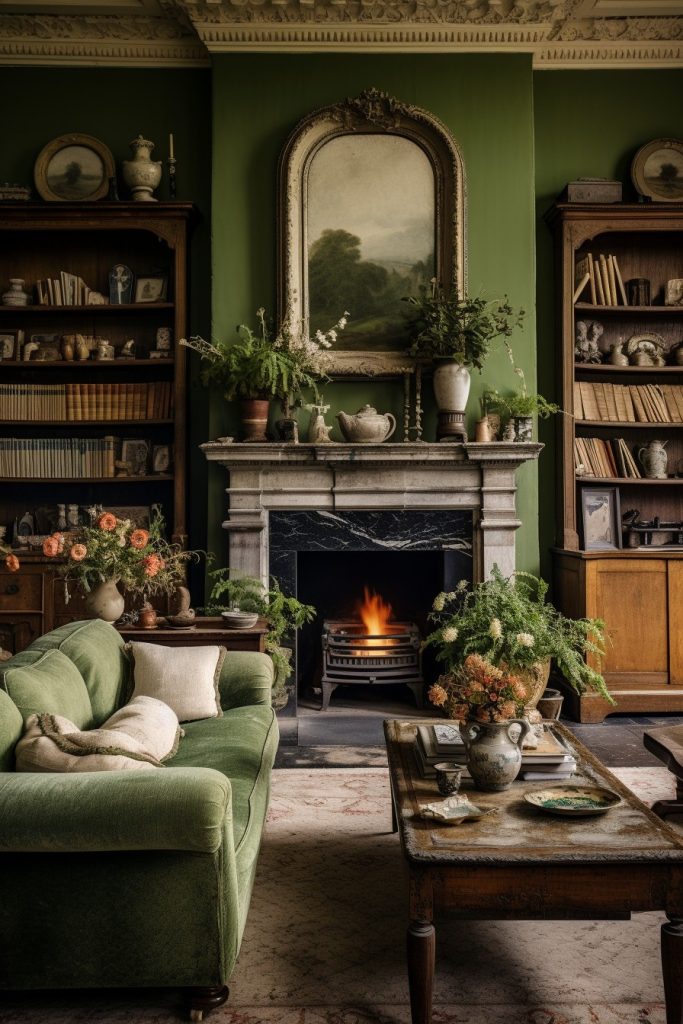
If original tiles remain, they can become the palette for the rest of the room. If they are missing, reclaimed or sympathetic new tiles are usually more convincing than adding unrelated decorative motifs elsewhere.
Glazed tile also catches firelight particularly well.
A wood burner changes the room differently
A stove gives a strong dark object and controllable heat, but it changes the proportions of a fireplace. In a large inglenook it can look comfortably contained; in a small surround it may dominate.
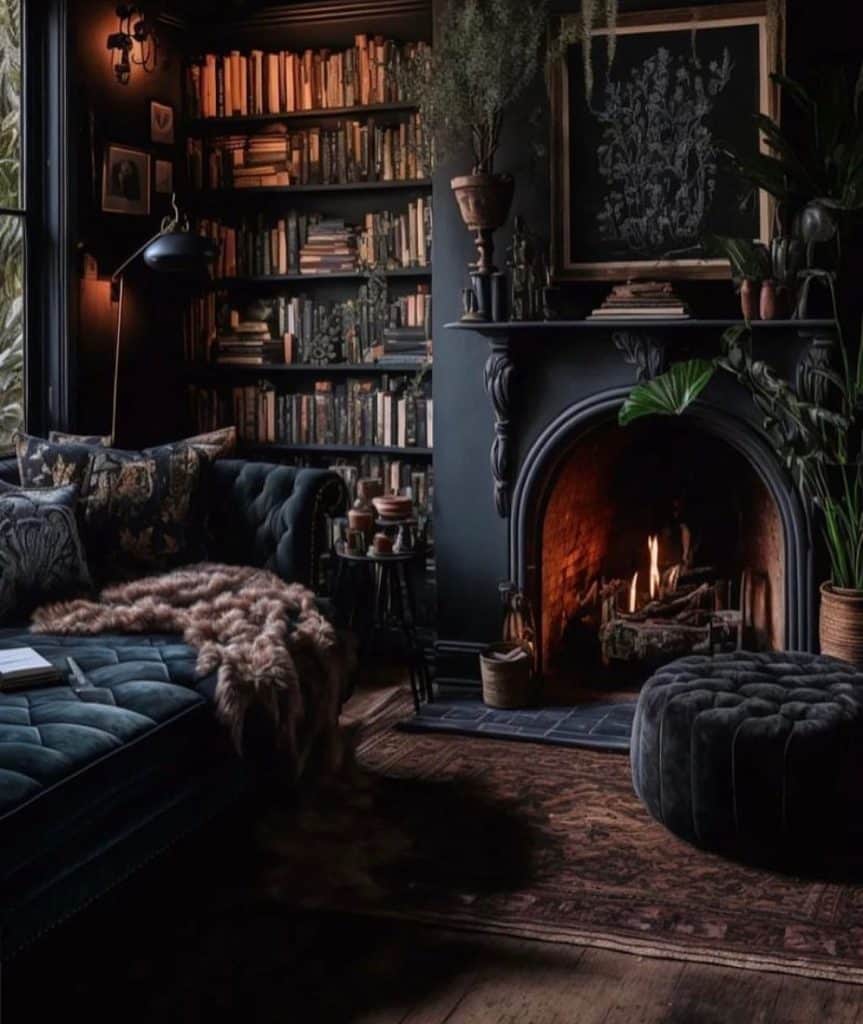
The practical installation matters more than appearance: flue condition, hearth dimensions, ventilation and clearances all need competent assessment. A stove is not a decorative prop.
Do not over-style the mantel
A mirror, picture, clock, pair of candlesticks or vase can be enough.

The most convincing mantels usually leave some surface visible. A dense arrangement of dried plants, wax, books and curios can look good in a still photograph while becoming annoying to dust and unsafe near heat.
Let the fireplace be the main object.
Logs are useful texture because they are logs
A basket or stack of seasoned firewood brings rough bark, cut ends and warm brown into a room. It does not need to be arranged into a decorative tower.

Keep wood dry, avoid blocking ventilation and do not stack it where sparks can reach it. The practical use is part of the visual appeal.
Rugs need distance from sparks
A red or worn patterned rug can make a hearth area feel much warmer, but textiles should stay safely clear of open flame and falling embers.
Use a proper fireguard where needed. The aesthetic does not improve when the rug catches fire.
An unused fireplace can still work hard
A disused hearth can hold a basket, a few logs, a simple iron grate or nothing at all. Avoid filling it automatically with candles, books or decorative objects.
The dark opening itself gives depth to the wall. Sometimes that is enough.
If the chimney is blocked or unused, ventilation and damp still matter. Old chimney breasts are part of the building fabric, not just recesses to style.
Position the room around the heat
Furniture arranged toward a fire naturally creates a more intimate room. A chair angled toward the hearth, side table within reach and lamp behind the shoulder can create a whole reading corner without adding much else.
That is why fireplaces belong so naturally in Cottage Goth interiors: they make the room behave the way the aesthetic looks.
Sources and further looking
- Inigo: Ralph Cottage — exposed brick chimney breast and double-fronted wood burner.
- Inigo: Harrow Road — original fireplaces in a small Georgian worker's cottage.
- Inigo: Aubrey Cottage — original surrounds, cast iron and patterned tile.
- Cottage Goth living room — arranging the room around a focal point.