Bathrooms are small enough to take strong colour and reflective enough not to lose it completely. Glazed tile, mirrors, chrome, brass, enamel and water all catch light, which is why a deep green bathroom can feel jewel-like rather than merely dark.
The practical difference from a sitting room is obvious: everything has to tolerate steam, splashes and cleaning.
Dark green is particularly good with white sanitaryware
A white bath or basin gives dark walls something crisp to work against. The contrast is useful in a small room because the fittings remain easy to read even when the walls are very deep.
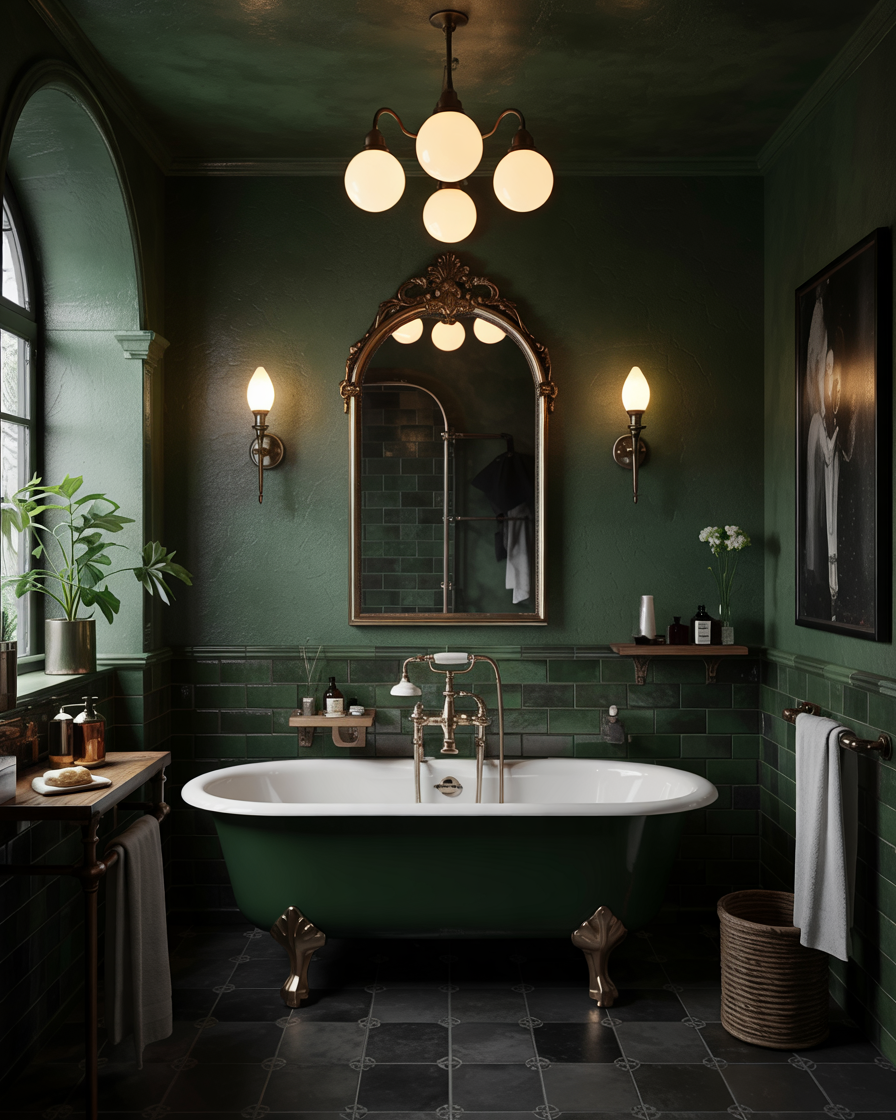
Ralph Cottage in Surrey, sold through Inigo, used Little Greene's Dark Brunswick Green across both walls and bath, with chequerboard flooring and traditional chrome fittings. The white fittings, patterned floor and chrome break up the colour.
Deep blue, aubergine, brown-black and oxblood can work in the same way.
Use tile where water actually goes
A bathroom does not need to be tiled from floor to ceiling just because it is practical to wipe down.
Tile the shower enclosure, bath surround or splash zones properly, then let painted or panelled areas bring softer texture where they will stay drier. An uneven glazed surface also keeps a deep colour from reading as one flat block.
Aubrey Cottage in Walthamstow used deep-green zellige tiles in its shower room. Their uneven surface means the green shifts rather than reading as one flat colour.
Mirrors do two jobs
An old mirror is both a useful fitting and a strong object. Put it at a practical height and choose a scale that suits the basin rather than treating it as wall decoration.

Ornate gilt, dark timber, painted and simple foxed mirrors can all work. The important things are scale, safe fixing and a position where the mirror is actually useful.
A tiny decorative mirror above a basin is frustrating no matter how attractive the frame is.
Brass is not the only answer
Aged brass looks warm against deep green, but polished chrome, nickel and even blackened metal can be equally good.
Ralph Cottage's chrome fittings are a useful reminder that the room does not have to follow the current fashion for unlacquered brass. Chrome gives a crisp, cooler contrast and sits comfortably with older sanitaryware.
Choose one main metal family and let small variations happen naturally rather than forcing every handle and hook to match exactly.
A rug can soften the room — carefully
A small washable rug on timber or tile can bring pattern and warmth, but it should not sit permanently soaked beside the bath.
Cotton and low-pile washable rugs are easier to live with than something precious. If the floor stays damp or the room has poor ventilation, skip the rug and let pattern come through tile, towels or a blind instead.
Timber needs protection but not erasure
A wooden vanity, stool, shelf or old cabinet can stop a tiled bathroom feeling hard. It also brings real age more convincingly than faux-Victorian fittings everywhere.
Use pieces that can tolerate the room, keep them clear of standing water, and finish vulnerable timber appropriately. An old pine cupboard beside a bath may need more care than the same cupboard in a bedroom.
Plants like some bathrooms more than others
Humidity can suit ferns and other moisture-loving plants, but only if there is enough light. A windowless bathroom is not magically suitable for plants because it is damp.
If light is poor, use one good vase of cut or dried material instead of collecting slowly declining houseplants.
Lighting needs to work at the mirror
Atmosphere matters, but shaving, make-up, cleaning and finding the toothpaste all require decent light.
Wall lights beside or above the mirror can provide useful local illumination. A pendant may be decorative, but bathroom zones and electrical safety rules matter; use appropriately rated fittings and a competent electrician where required.
Warm light keeps dark colour flattering and makes the basin comfortable to use.
Pattern can do more than novelty objects
Chequerboard floors, old floral blinds, small-scale wallpaper outside wet zones, patterned tiles and faded rugs all bring detail without turning the room into a themed set.
This is a good place to borrow from Victorian, Arts and Crafts and cottage interiors without copying an entire historical room.
Keep the everyday things visible enough
Soap, towels, toothbrushes and cleaning products are part of the room. Open shelves or hooks keep wet towels separate from dry storage, while a tray or cabinet contains the smaller things used every day.
Sources and further looking
- Inigo: Ralph Cottage — Dark Brunswick Green, chequerboard floor and chrome fittings.
- Inigo: Aubrey Cottage — deep-green zellige shower room and roll-top bath.
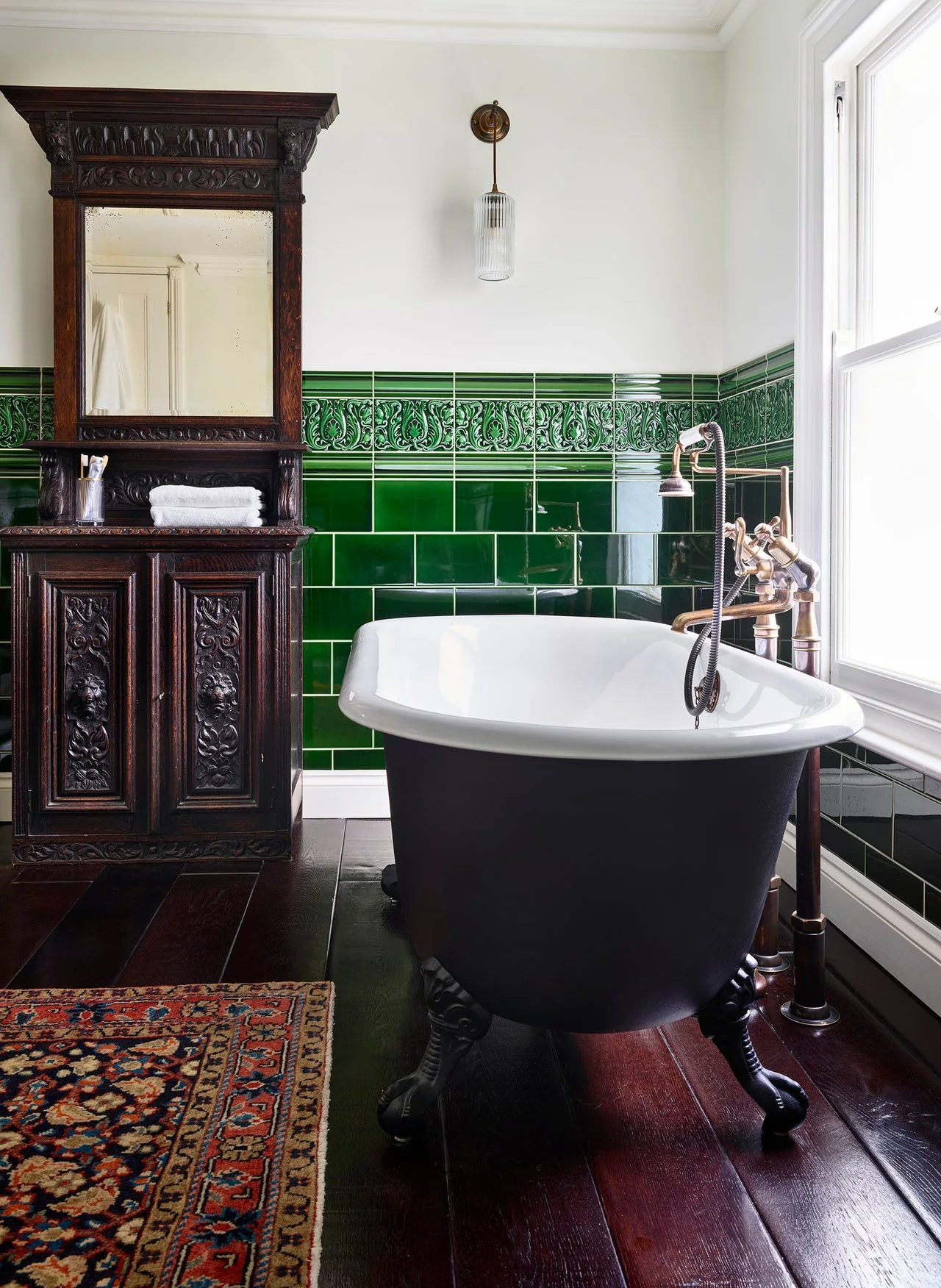
- Inigo: Mornington Road — dark green glazed tile and a cast-iron roll-top bath.