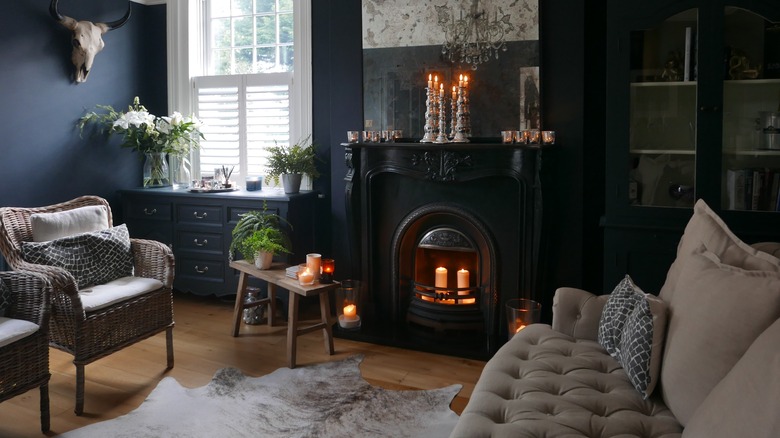
Furniture is one of the easiest places to give a Cottage Goth room real age. A chest of drawers that has already lived for eighty years does not need carved bats or artificial distressing to look interesting.
The useful pieces are usually ordinary: cupboards, chairs, tables, chests, shelves and mirrors with good proportions and visible material.
Search for the thing itself
Second-hand searches improve dramatically when the aesthetic label disappears.
Try oak chest of drawers, pine cupboard, mahogany mirror, bentwood chair, Victorian washstand, old side table, carved stool, campaign chest, wall cabinet or foxed mirror.
Add dimensions, location or material. That finds actual furniture rather than products marketed toward an aesthetic.
One old piece can change a modern room
A modern sofa beside an old pine chest can look more convincing than a room filled with matching reproduction furniture.

The old piece brings irregular colour, softened edges, old hardware and marks where people actually touched it. That is enough to make newer things around it feel less sterile.
Harrow Road and Gloucester Road are useful examples of this broader principle: rich paint and old architectural fabric work because the rooms retain varied, ordinary furniture rather than becoming period sets.
Different woods can coexist
Do not assume every piece of timber needs to match.
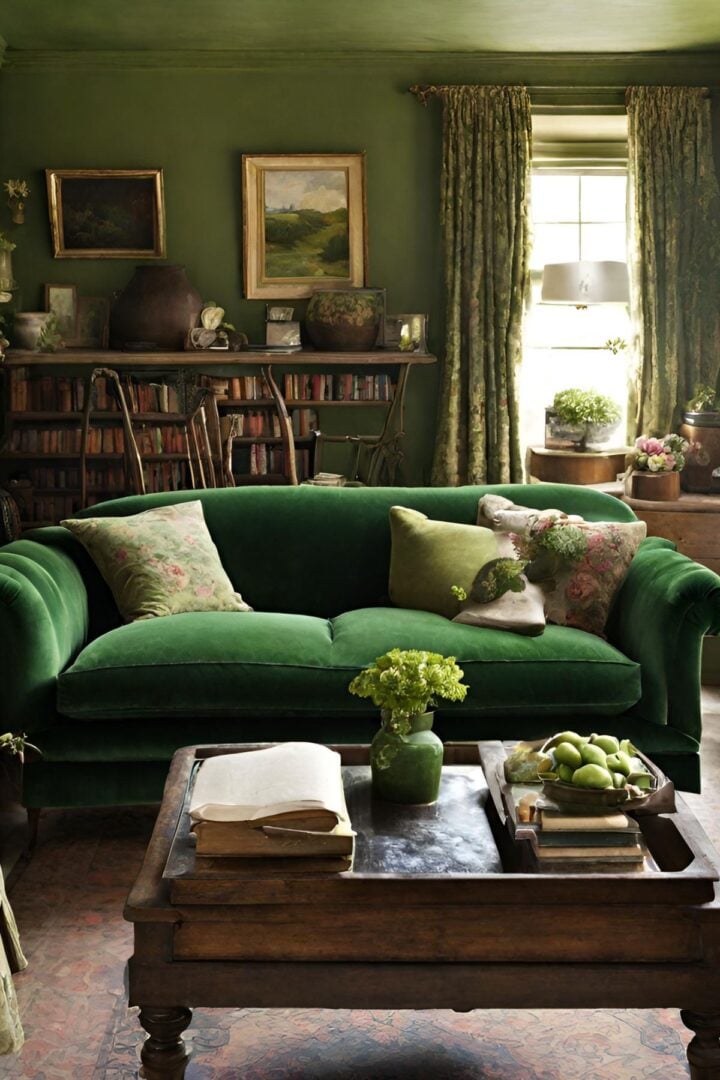
Pine, oak, walnut and mahogany age differently. In an old house, furniture arrived over decades and often came from different periods. A room with several wood tones can feel more natural than one where every surface is the same stain.
Use repeated details elsewhere — brass, dark green, red textiles, cream plaster — to hold the mixture together.
Mirrors are furniture for light
A mirror is not only decoration. It can pick up a window, lamp or fire and send that light back into the room.
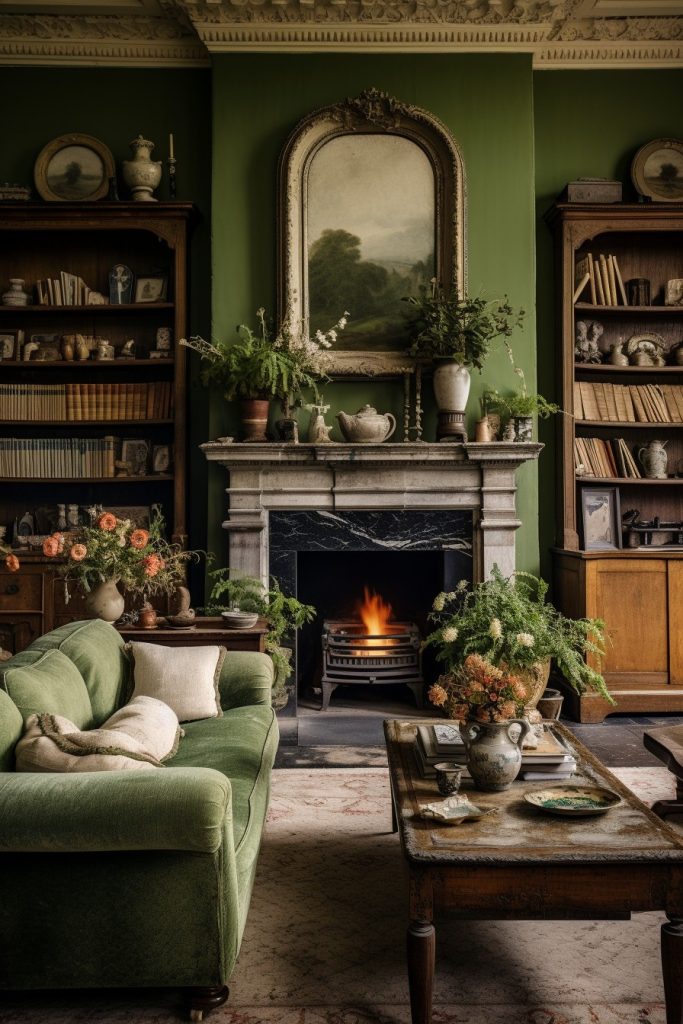
Large leaning mirrors can make a dark bedroom feel deeper. A gilt or dark-framed mirror over a fireplace gives the wall a centre. Several small old mirrors can form a gallery, but they work best when the frames genuinely differ rather than arriving as one matching set.
Position matters more than ornament. A mirror reflecting a blank wall contributes less than one catching a window, bookcase, plant or lamp.
Foxing can be beautiful — until you need to see yourself
Old mirror glass often develops dark spots, clouding and a softened reflection. That can be lovely on a decorative mirror.

Above a bathroom basin or dressing table, however, usable reflection matters. Keep the most heavily foxed mirrors for places where atmosphere is the main job and use clearer glass where the mirror is functional.
Scale is more important than style
A huge carved wardrobe in a tiny room is still a huge carved wardrobe. Measure doors, stairs, ceiling height and the final position before buying.

Small cottages often suit narrower chests, wall cupboards, drop-leaf tables and chairs that can move easily. A beautiful piece that blocks the only useful route through a room will become irritating quickly.
Look at the back and underneath
Old furniture reveals itself in construction. Drawer runners, dovetails, backs, feet, repairs and hardware can tell you more than the polished front.
This is also where damage hides. Check for active woodworm, loose joints, damp, missing feet and drawers that no longer move. Cosmetic scratches are often fine; structural problems can make a cheap piece expensive.
Repair is better than fake ageing
A loose handle, dry drawer runner or tired wax finish may need simple care. Preserve useful wear instead of sanding everything back to look new.
If a piece genuinely needs refinishing, do it for the material and function rather than trying to manufacture an older-looking surface. Real age is uneven.
Upholstery can be changed
An old chair with the right frame but dreadful fabric can still be useful. Reupholstery can bring wool, velvet, linen or patterned cloth into the room while keeping the old timber and proportions.
Check the frame and springs before spending money on fabric. A sound chair is a much better starting point than a beautiful textile stretched over a failing structure.
Do not buy clutter to make furniture look old
An old cabinet does not require eleven curios on top. Let the timber, handles and shape remain visible.
A lamp, a stack of books, a vase or one framed photograph can be enough. Empty surface is useful in a real house.
The best piece is the one you keep using
A chest that stores clothes, a chair people sit in and a mirror used every morning will gather new wear and become part of the room's history.
That is a stronger version of Cottage Goth than buying something purely because it already photographs correctly.
Sources and further looking
- Inigo: Harrow Road — a small old house using rich colour without turning its furniture into a set.
- Inigo: Gloucester Road — period proportions, parquet and collected pieces.
- Cottage Goth lighting — using mirrors to move daylight and lamplight around a dark room.