A modern room often gives itself away through a few bright, smooth things: white walls under a hard ceiling light, chrome, glossy plastic, perfectly even flooring, matching furniture and large stretches of fabric with barely any texture.
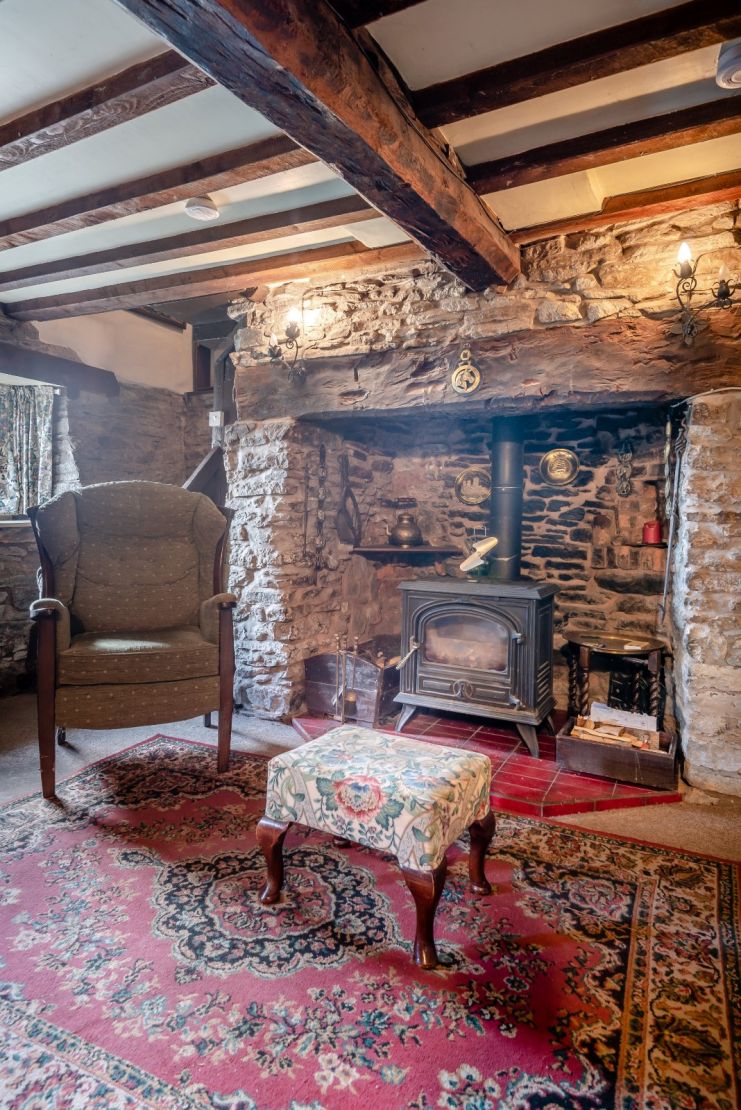
You do not need to disguise the architecture. False beams, stick-on brick and furniture distressed at the factory usually make the pretence more obvious.
A better approach is to change what the eye notices first: the light, the sheen, the texture and the things that look as though they have been there for a while.
Soften the light first
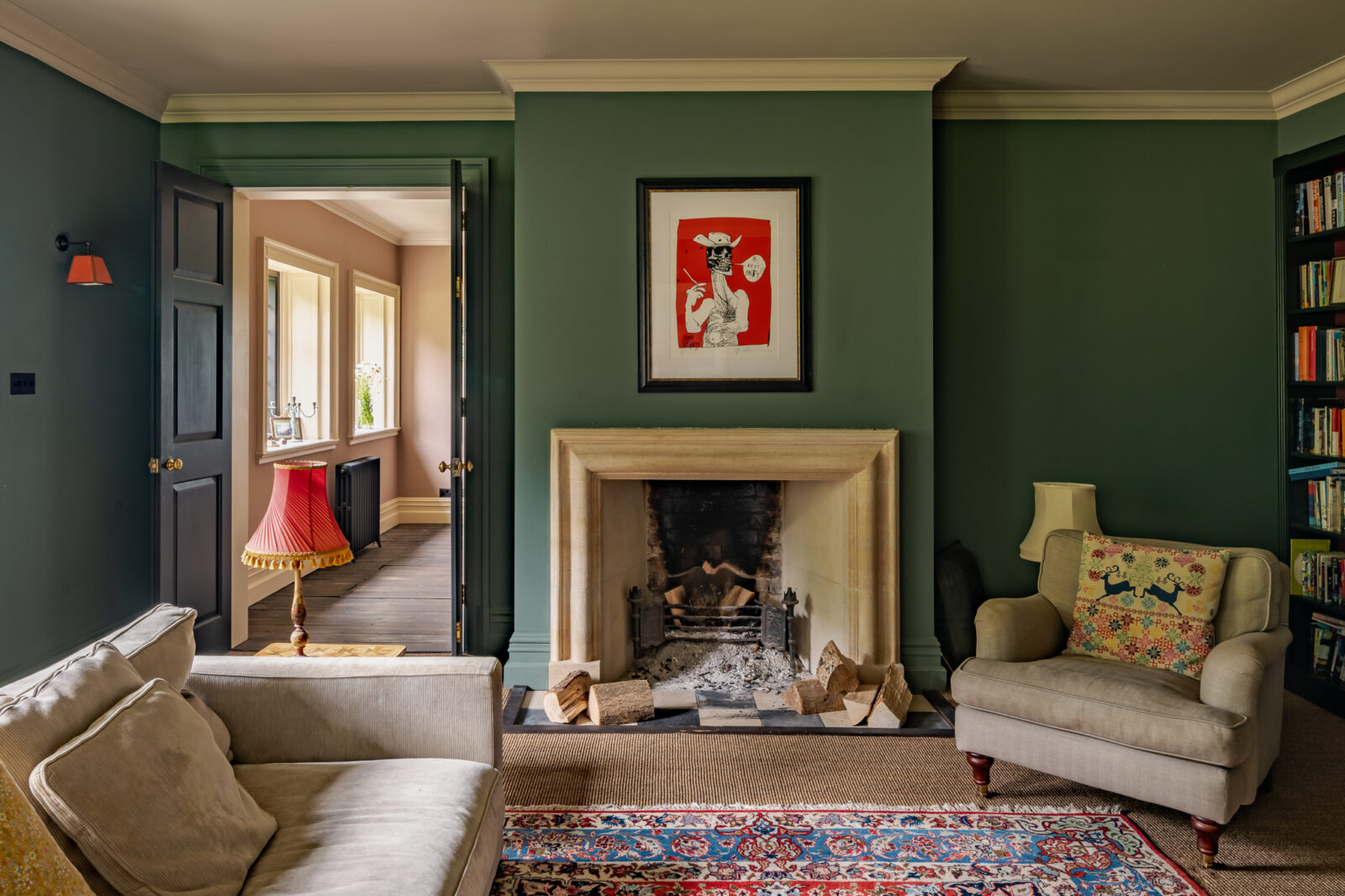
One bright ceiling fitting flattens a room. Timber, old paper, velvet, linen and dark paint all look better when there are shadows between the pools of light.
Add table lamps, floor lamps or wall lights before buying another piece of furniture. Fabric, ceramic or opaque shades help because the lamp itself glows instead of exposing a bare bulb.
Warm light does not need to mean orange light. It simply needs to avoid the icy effect that can make timber and textiles look washed out.
Candles can add atmosphere too, but they are still naked flames. A stable candlestick and clear space around it matter more than the photograph.
Quiet the shiniest things
Chrome, mirror-polished steel and glossy white plastic catch the eye immediately. You do not have to remove every modern surface; just stop them all competing at once.
A chrome lamp can become brass, ceramic or painted metal. A glossy side table can give way to timber. Bright handles can be swapped for darker metal. A plastic plant pot can disappear inside terracotta, stoneware or a basket.
These are small changes, but together they make the room feel less showroom-new.
Bring in one thing with a past
A room full of reproduction antiques is a theme. One genuinely old object has a different presence.
A mirror, a little table, a chair, a framed engraving, a cupboard, a box, a candlestick or a piece of pottery is enough to begin. It does not have to be grand.
Look for wear that makes sense: a handle polished by hands, a drawer runner rubbed smooth, uneven fading, a repair that has been there for decades. Before buying, still ask the boring questions — does the chair wobble, is the mirror safe to hang, does the old lamp need rewiring, is there active woodworm?
.jpg)
Break up smooth surfaces with cloth
Modern rooms often contain big, even planes: roller blinds, fitted carpet, plain sofas and crisp bed linen.

A few textiles can make them softer without filling the room. Linen curtains, a wool blanket, a woven cushion, a small rug, a quilt or a heavy bedcover all catch light differently.
The mix matters. Linen beside polished timber feels different from linen beside wool; velvet goes dark and bright as the pile moves.
Let timber stay warm
Grey-washed laminate has become such a familiar shortcut for “rustic” that it often makes a room feel newer rather than older. Real timber has grain, colour, knots and wear of its own.
If you already have a good wooden table, dresser or chair, do not assume it needs painting black. Warm wood against a dark wall is often the contrast that makes the darkness work.
When buying second-hand, look underneath and at the back. Joints, tool marks and repairs usually tell you more than the polished front.
Put something on the wall that has a subject
Botanical plates, old maps, natural-history engravings, landscapes, local photographs, book illustrations and family material all bring more life than generic “gothic” wall art.
The frame can be simple: dark timber, narrow gilt, old oak. What matters is that there is something to look at once you get close.
If you are using an old image, start with a decent reproduction. Age does not rescue a fuzzy scan blown up beyond recognition.
Dark paint is optional
Deep green, brown, aubergine, charcoal and near-black can be beautiful, but they are not compulsory. A pale room with dark timber, old furniture and low light can feel much older than a black room full of new glossy things.
If the building itself is old, wall finishes are also a technical choice. Some traditional solid walls depend on vapour-permeable materials, and SPAB warns that dense modern coatings can trap moisture.
Let modern things be modern
A television, radiator, induction hob or modern sofa does not break the spell. Trying to disguise every contemporary object often creates more fuss than simply letting it sit quietly in the room.
A television recedes against a dark wall. A modern sofa looks less showroom-perfect beside an old table. A new kitchen gains warmth from timber boards, pottery, pictures and better lighting without needing fake period details.
If you only change a few things
Start with the light. Then quieten the glossiest modern surfaces. Add one old object, one or two good textiles and something on the wall that you genuinely want to look at.
Only after that decide whether the paint needs changing at all. Quite often the room has already moved far enough.