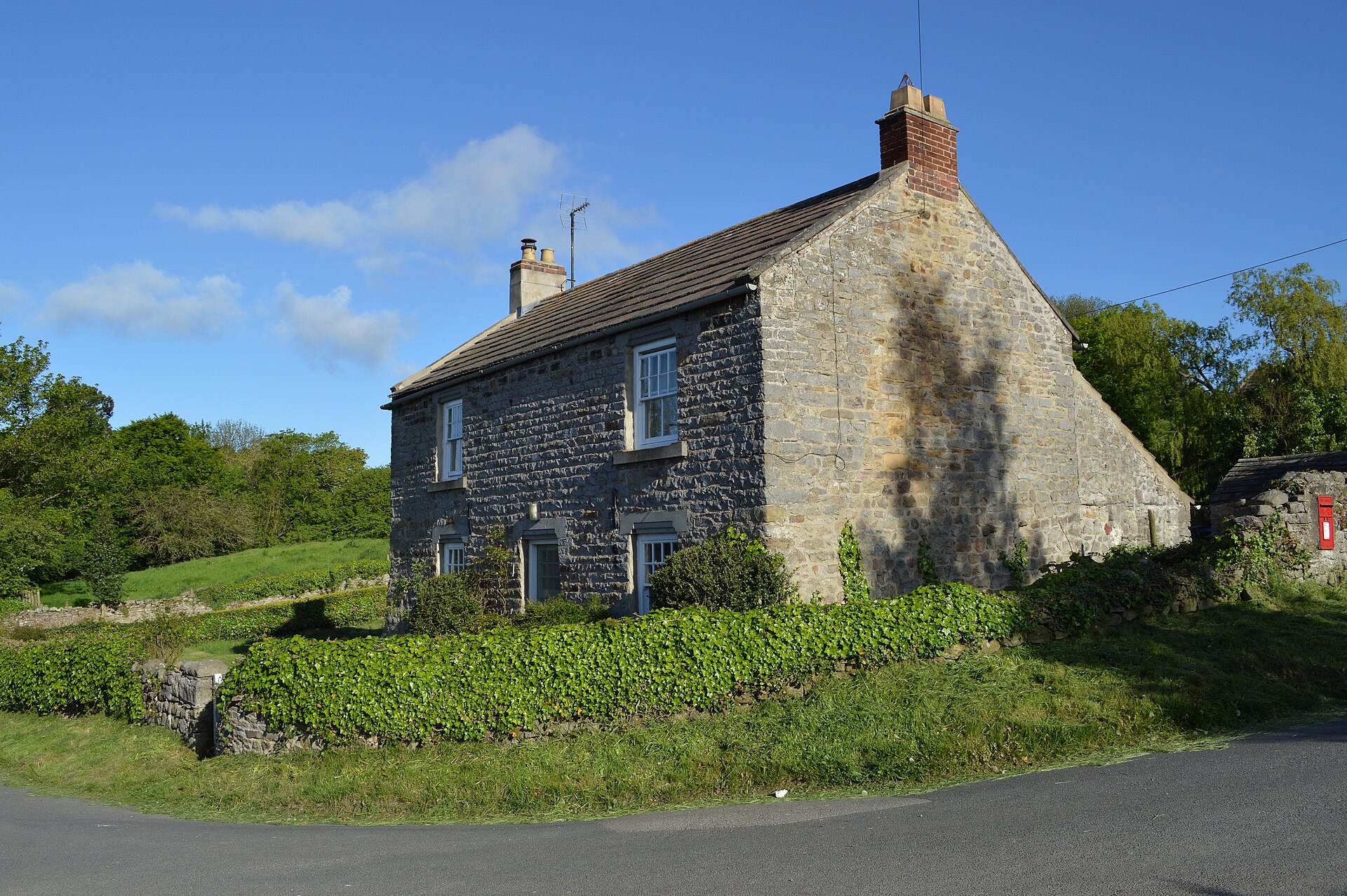
An old house wears its construction on the surface. Lime plaster is softer and less uniform than gypsum. Hand-made glass bends the view outside. Old timber carries knots, peg holes, tool marks and repairs. Iron latches polish where generations of hands have touched them.
Those details are a large part of the atmosphere people try to recreate in newer rooms. If you already have them, it is worth understanding what they are before sanding, sealing or replacing them.
Lime: soft walls that move moisture
Before modern Portland cement and gypsum became common, lime was everywhere in British building: mortar, plaster, render and limewash.

SPAB describes lime as fundamental to the repair and long-term protection of many old buildings. Traditional lime-based materials are comparatively permeable and flexible, allowing moisture to move through the fabric and tolerating small movements that harder cement-rich mixes resist.
That does not make lime a magic answer for every old wall. It means the new material needs to suit the old one. A dense cement render over a soft, porous wall can change the way moisture escapes.
Lime is beautiful too. Limewash builds in thin, slightly translucent coats; lime plaster can retain trowel marks and tiny variations in colour. It does not need extra texture added to make it look alive.
Timber: keep the evidence
Old floorboards may have been lifted and re-fixed several times. Beams show joints, peg holes or adze marks. Window frames can carry layers of paint and repairs from different decades.
Historic England notes that old timber windows were often made from durable wood and can last for a very long time when they are maintained.
So look before sanding everything pale and flat. A dark edge where hands touched a rail, an old patch, a line of redundant nail holes or a worn threshold may be the very thing that gives the timber its character.
Glass: the view should wobble a little
Older window glass often contains small distortions, bubbles or waviness from the way it was made. On a wet day the outside world can look almost liquid through it.
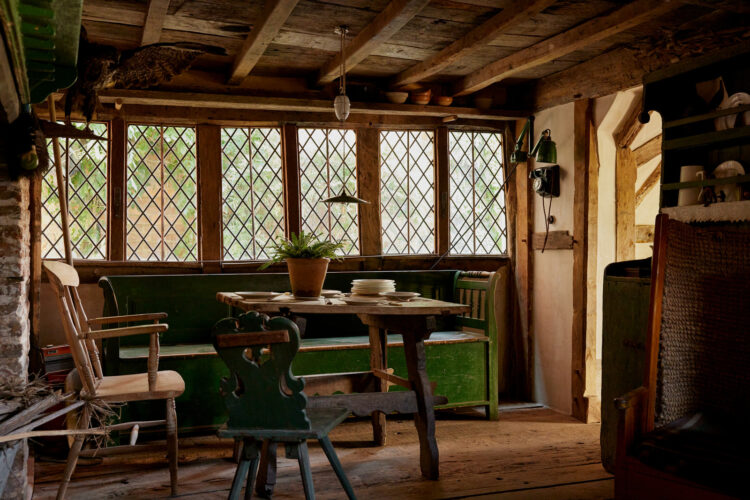
Historic England treats traditional windows as important for their design, materials and workmanship, and the old glass is part of that. Once it has gone, a convincing replacement is not easy.
Comfort still matters. Draught-proofing, shutters, curtains and carefully designed secondary glazing can often make an old window easier to live with without throwing away the original frame and glass. The right answer depends on the building and its condition.
Iron: dark detail that was made to be used
Latches, hinges, grates, ranges, brackets, nails, hooks and locks give old rooms some of their darkest details.
Forged and cast iron have weight and small irregularities. Paint builds around them. The handle brightens where fingers rub it. Rust appears where the coating fails.
Not all rust is charming. A structural fixing or metal window may need proper repair. The distinction is fairly simple: a worn latch that still works is patina; a hinge pulling out of rotten timber is a job for somebody to fix.
Stone and brick: local colour before paint charts
Old masonry changes from place to place because the geology and local building traditions change. A granite cottage in Cornwall does not have the same stone, joints or weathering as a limestone cottage in the Cotswolds.
Mortar affects the look as much as the stone. Hard ribbon-like cement pointing can sit heavily on soft masonry, while lime tends to weather and soften with the wall.
Inside, exposed stone should belong there. Plenty of old walls were meant to be plastered. Stripping them simply because bare stone looks “cottagey” can create both a false history and a maintenance problem.
Paint and plaster: what “breathable” actually means
“Breathable” gets printed on a lot of tins. In traditional solid-wall construction it refers to the ability of the building fabric to transmit moisture rather than trapping it behind a dense coating.
That can matter enormously. Impermeable finishes may stop moisture evaporating from old walls, contributing to damp, salts, mould or decay.
If you are choosing a product because it says breathable, look beyond the word itself. SPAB recommends checking the technical vapour-resistance information where it is available.
Keep what gives the room its age
Deep window reveals, repaired plaster, old timber, imperfect glass, worn stone thresholds and black ironwork do not need an aesthetic explanation. They already carry the history of the building.
The strange thing would be to remove them all, make the house smooth and new, then buy distressed furniture to put the age back in.
If you live in an old building, decorating and looking after the fabric are often the same conversation. That is not a restriction; it is what makes the room yours rather than a generic old-house look.