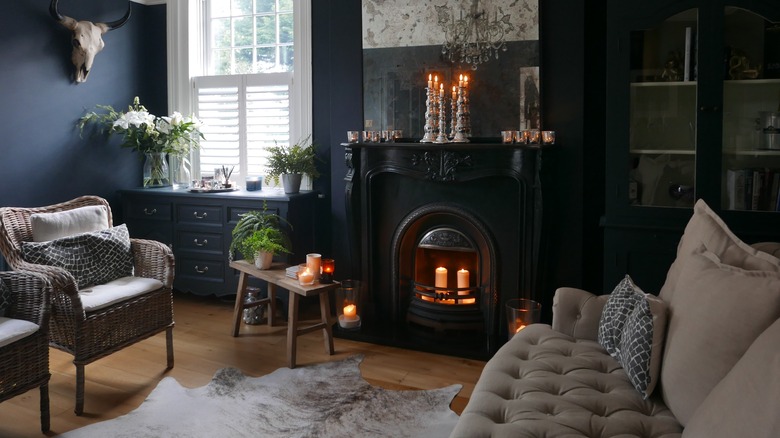
Lighting does more for a Cottage Goth interior than another shelf of decorative objects. Deep colour, old timber and worn textiles only look rich when there is light for them to catch.
Aim for contrast: one warm corner, a bright page, a softly lit picture, a fire, then quieter shadow around them.
Use several small lights
Cottages are often naturally dark because of small windows, thick walls and low ceilings. Homes & Gardens recommends layered lighting — wall lights, table lamps, pendants and task lighting — rather than relying on one fitting to do everything.
That approach suits Cottage Goth particularly well. A table lamp beside the sofa, a wall light by the fireplace and a reading lamp in a chair corner make the room feel larger because the eye moves between separate pools of light.
Warm bulbs are the easy win
Around 2700K is a useful starting point for living rooms and bedrooms. It gives timber, brass, red, green and cream a warmer cast than cool white light does.
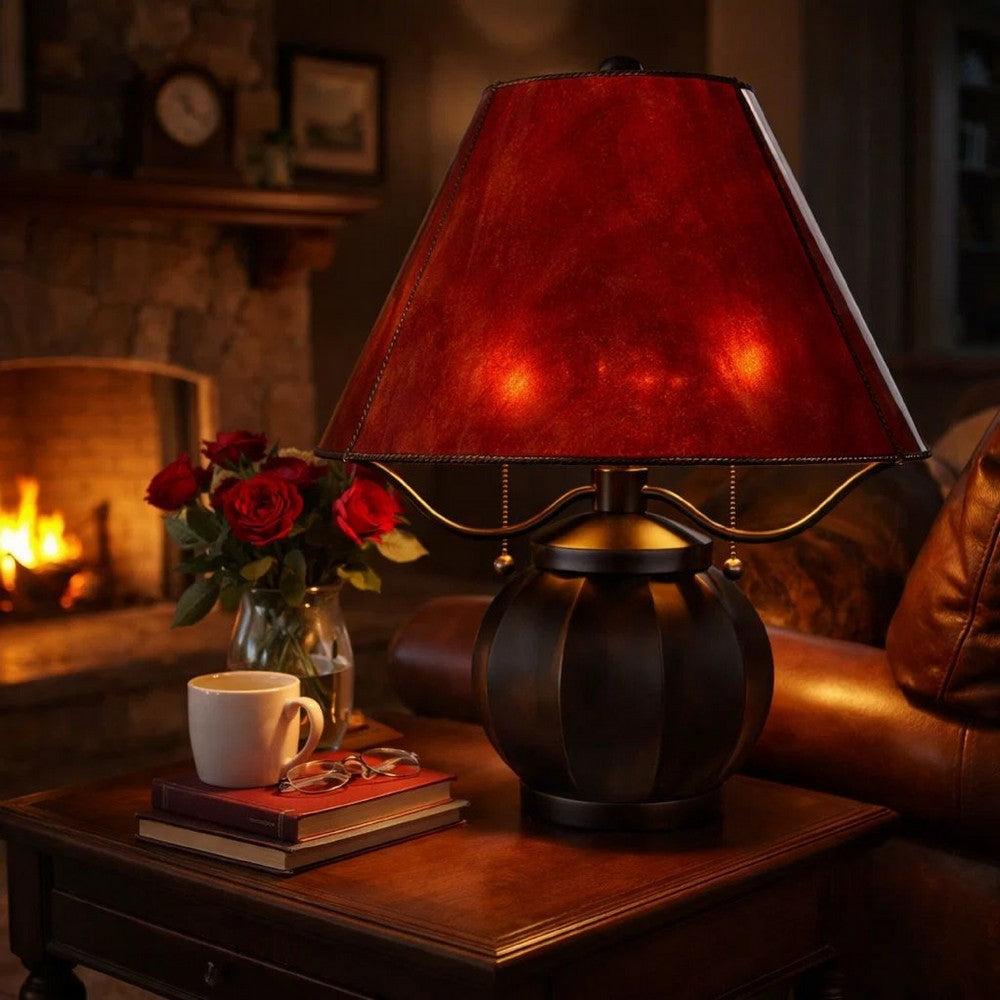
The exact number is less important than consistency. A room with one icy white bulb and three warm lamps rarely feels deliberate.
Dimmable warm bulbs are especially useful because the same fitting can serve a grey afternoon and a late evening.
Put task light where the task happens
The worktop needs enough light to cook. The chair needs enough light to read. The mirror needs enough light to see your face. The stairs need enough light to be safe.
Solve those first. Atmosphere can then fill the gaps.
This prevents the common mistake of making a room photograph beautifully while every practical activity requires switching on an unpleasant ceiling light.
Wall lights suit low rooms
Wall sconces are useful in cottages because they do not steal head height. They can wash plaster or dark paint with light and create a glow at eye level.

Brass, blackened metal, ceramic and painted fittings all work. Pleated fabric shades soften the light; opal or milk glass gives a broader, more even glow.
If the house has original plaster, stone or panelling, wiring routes need thought. Do not damage genuinely old fabric simply to make a fitting look old.
Table lamps make a room feel inhabited
A lamp on a chest, desk, side table or kitchen dresser immediately suggests use. It also creates a brighter object within a darker composition.

The shade matters as much as the base. Cream linen, parchment-coloured fabric, gathered cotton and dark red shades all alter the colour and direction of the light.
A dramatic antique lamp is lovely, but an ordinary old brass lamp with a good shade often does the job just as well.
Opal and milk glass are useful against darkness
Opaque white glass hides the glare of the bulb and becomes a softly glowing object itself. That makes it especially effective against dark green, brown or charcoal walls.
Clear glass can throw more light around, which is useful where a room is very dim, but visible bulbs can become harsh if they sit directly in your line of sight.
Use the shade according to the job, not according to a rule.
Candles are an extra, not the lighting plan
Candles add movement and warmth, particularly on a mantel or table, but they are not a substitute for safe, usable electric light.
Keep flame away from dried plants, books, curtains and crowded shelves. Battery candles can be useful in awkward decorative spots where real flame would be foolish.
A room should still work after the candles are blown out.
Let mirrors and pale surfaces help
A mirror opposite or beside a window can move daylight further into a room. At night, mirrors, glazed tile, glass and polished metal pick up small lamps and make them appear more numerous.
This is one reason a dark bathroom can tolerate stronger colour than a matt, windowless box: reflective surfaces keep returning some of the light.
A pale lampshade or patch of plaster can perform the same job on a smaller scale.
Pendants need a reason to hang there
In a low cottage, a large central pendant can be more obstacle than feature. Pendants make more sense over a dining table, island or other place where nobody walks underneath.
In taller rooms, a chandelier or pendant can give the space a strong centre, but it should still contribute useful light rather than hang as sculpture with an underpowered bulb.
Light the architecture you already have
A beam, rough plaster wall, stone fireplace or old cabinet can become more interesting with a nearby lamp than with a spotlight aimed theatrically at it.
Side light exaggerates texture. That is often enough.
The best Cottage Goth lighting reveals old materials clearly and keeps people comfortable. It should feel like the room is glowing, not being displayed.
Sources and further reading
- Homes & Gardens: Cottage lighting ideas — layered light, wall lights, low ceilings and task lighting.
- The Hartley Cottage: How to light a low-beamed cottage — practical discussion of sconces, lamps and warm bulbs.
- Cottage Goth bedroom — where bedside and reading light matter most.