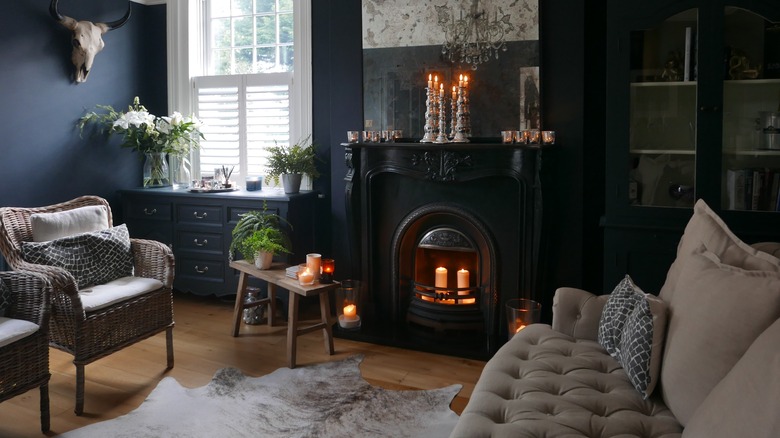
At eleven at night, a bedroom still has to work as a place to sleep. Deep walls, an iron or timber bed, old furniture and dark florals can make the room wonderfully enclosing; clean bedding, effective curtains and a reachable lamp are what make it comfortable.
Contrast gives the darkness its shape: a deep green wall beside pale linen, black iron against worn timber, a heavy quilt under a small warm lamp. These changes in colour and surface remain visible after dusk.
The bed gives the room its scale
The bed occupies more visual space than anything else in the room. If it has the right shape and texture, the rest can stay simple.

Old iron frames bring dark line and age without adding visual bulk. A timber bed does the same job when the grain, joints and wear remain visible. Four-posters and canopies suit generous rooms; a plain iron frame under a good quilt has enough presence for a smaller one.
Build the bedding in layers. Linen, cotton, wool, crochet, quilts and old floral patterns catch low light differently, so a limited palette still has depth.
Deep green changes with the daylight
Deep green approaches black after dusk, then reveals warmer or bluer undertones during the day. In the principal bedroom of Harrow Road, a small 1823 worker's cottage sold through Inigo, dark-green walls sit beside a cast-iron fireplace and surviving original features.

Brown-black, aubergine, soot blue and deep red have similar weight. Paint a large sample and move it around the room for several days; the right shade will sharpen the timber and textiles through the full cycle of daylight and lamplight.
Pale textiles give the shadows an outline
White or cream bedding reflects the small pool of light around a bedside lamp and gives dark furniture a clear outline.

A linen sheet, lace edge, plaster wall, lampshade or curtain can do the same job. One or two pale surfaces are enough to separate the bed, walls and furniture after sunset.
Curtains need weight and full closure
Bedrooms need curtains that close fully, control early light and feel substantial in the hand. A generous drop also brings a large area of fabric into the room, which softens hard edges and makes the bed feel more sheltered.
Washed linen, velvet, wool mixes and old floral curtains all work. If black sheer fabric is part of the scheme, hang it with a properly lined or opaque layer that covers the whole window.
Put light within reach
A bedside lamp should let you read without switching on a bright central light.
Warm lampshades, opal glass and small wall lights create local pools of light while the rest of the room recedes. In a room with a low ceiling or beams, several low sources spread light more gently than a single central pendant.
Candles look good in photographs. A proper lamp is what you will use on a wet Tuesday in February.
Choose old furniture by measurement and use
Begin with the gap beside the bed, the height of the mattress and the storage the room lacks. Those measurements make an old chest of drawers, bedside table, chair or mirror easier to choose and easier to live with.
Search by material and object: pine chest, oak bedside table, mahogany mirror, bentwood chair, small washstand. Keep sound repairs and wear at handles, edges and drawer fronts. They record how the piece has been handled and will survive close inspection.
Put plants only where the conditions suit them
A trailing plant on a shelf, dried stems above a picture or a vase of seed heads can soften the room. Judge the windowsill by its actual light and temperature before adding anything living.
Low-light plants still require light. Where the window cannot provide enough, dried seed heads or bare branches are the honest choice. A dying fern is not improved by being aesthetically appropriate.
Give modern necessities a settled place
Phones, chargers, radiators and a modern mattress belong to the room that exists now. Give each one a settled place and they stop competing for attention.
A woven basket can hold cables. A bedside drawer can hide chargers. A simple modern lamp can sit beside an old bed. Pieces of different ages will settle together through use.
A first arrangement
Begin with deep green or brown-black walls, an iron or dark timber bed, pale linen, one patterned quilt, a bedside lamp with a warm shade, an old rug and one sound piece of old furniture.
Live with that arrangement for a while. After a few nights, the missing practical detail usually becomes obvious.
Sources and further looking
- Inigo: Harrow Road — dark-green principal bedroom with a cast-iron fireplace.
- Inigo: The Square, Dolton — old cottage fabric and a genuinely dark bedroom.
- Homes & Gardens: cottage lighting ideas — practical lighting in small and low-ceilinged rooms.