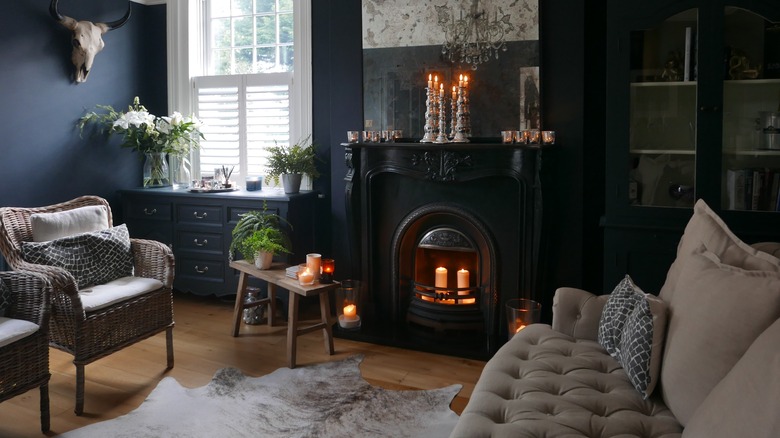
A Cottage Goth reading room is one of the places where neighbouring aesthetics genuinely overlap. Dark academia brings books, wood and study; Cottage Goth brings the softer room around them: worn textiles, plants, old domestic furniture, weather at the window and the feeling that the garden is not far away.
The useful distinction is function. This is not a library set. It is somewhere to read for an hour without noticing that an hour has passed.
Start with the chair
The best chair is the one you can actually stay in. It does not need to be Victorian, tufted or velvet, though any of those may suit the room.
A deep armchair with a footstool, a wingback chair, an old leather chair or even a simple upholstered chair with the right proportions can work. Add a small table within reach for a mug and a book. If you constantly have to stand up to put things down, the arrangement has failed no matter how good it looks.
Put light on the page
Reading needs task light. A low amber glow elsewhere in the room is lovely, but the page itself should be easy to read.

A floor lamp beside the chair, adjustable table lamp or shaded wall light can provide a local pool of light without illuminating the entire room. Homes & Gardens' cottage-lighting guidance makes the same practical point: layered table, wall and task lighting works especially well in cottages, where low ceilings and small windows make a single central fitting less useful.
Use a shade that hides glare from the bulb when you are sitting down.
Shelves should fit the books you own
Floor-to-ceiling shelving can be wonderful, but only if the room and collection justify it. A modest wall of shelves, an old bookcase and a stack beside the chair can feel just as convincing.

Measure your books before fixing shelf heights. Art books, field guides and large folklore volumes do not enjoy being forced into shelves designed only for paperbacks.
Dark green, brown-black or timber shelves make books look particularly rich because the varied spines come forward against them.
Let the collection stay irregular
Real libraries contain horizontal stacks, bookmarks, different editions, ugly useful books and books you have not read yet.
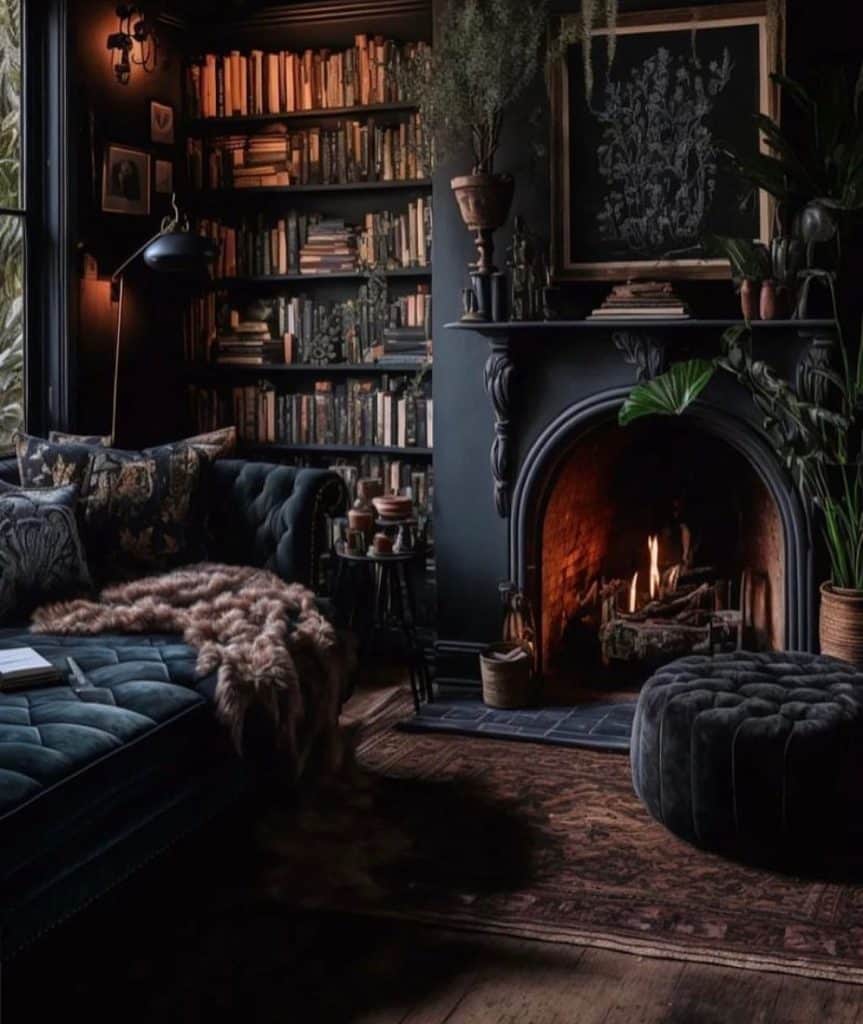
That irregularity is part of the appeal. Avoid stripping dust jackets, turning spines backwards or buying decorative metres of books simply to achieve a colour field. A reading room gets more interesting as your interests become visible.
Natural history, folklore, gardening, fiction, local history and old practical books all sit comfortably in this world because they connect the room to things outside it.
Dark timber can carry the room
A timber bookcase, old desk, side table or fireplace surround brings warmth without needing additional ornament.
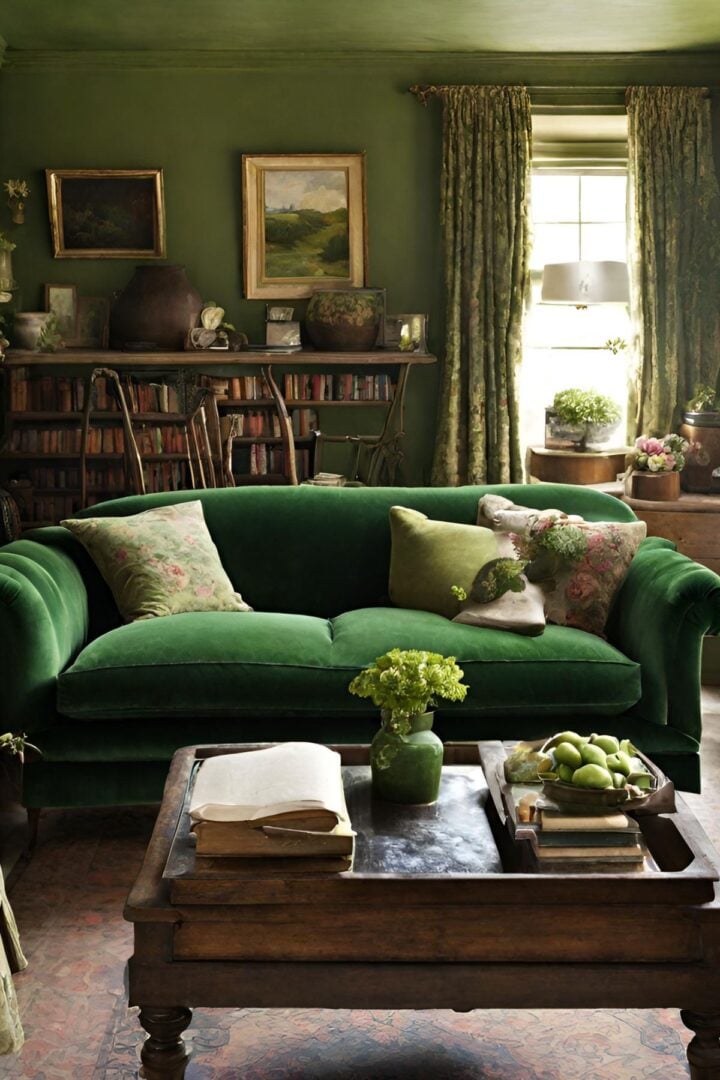
If the walls are also dark, vary the surfaces. Waxed timber, painted shelving, paper, glass, brass and fabric catch light differently. That keeps a small room from collapsing into one brown-black mass.
A ladder looks wonderful in a tall library only when it reaches something. In an ordinary room, a small step stool is often more useful and less theatrical.
Plants belong where the light allows
A fern or trailing plant can soften shelves and make the library feel connected to a garden. But the books should not become damp, and plants should not be watered directly over old paper.
Window sills, stands and lower shelves are usually safer than balancing pots above a valuable collection. Dried stems or pressed botanical prints can bring the same natural reference where living plants are impractical.
A fireplace changes the room even when unlit
A hearth gives a reading room a centre. An open fire or stove is particularly good in winter, but a disused fireplace still offers stone, tile, iron and a place for the furniture to orient itself around.
Do not crowd a working fire with books, dried flowers or baskets simply because photographs do. The room should survive contact with actual heat and sparks.
Add objects slowly
A reading room naturally gathers objects: a magnifying glass, old postcards used as bookmarks, a vase, a framed print, a small box, a stone from a walk.
Those are more convincing than buying a shelf of pre-selected 'dark academia decor'. The strongest rooms reveal a person's attention rather than a retailer's category.
The best crossover is botanical
Pressed plants, herbarium sheets, old botanical books, field guides and a living plant all sit naturally between cottage life, natural history and a more scholarly room.
That is a better bridge between Cottage Goth and dark academia than filling the shelves with generic skulls and quills.
Keep somewhere for the current book
A reading room feels alive when the book being read has somewhere to remain. A small table, stool or broad arm of a chair is enough.
The object is not to preserve the room. It is to keep returning to it.
Sources and further looking
- Homes & Gardens: Cottage lighting ideas — practical layered lighting for cottages and reading.
- Inigo: Harrow Road — fireplace with shelving in a deep-green sitting room.
- Cottage Goth folklore shelf — books and subjects already collected across the site.