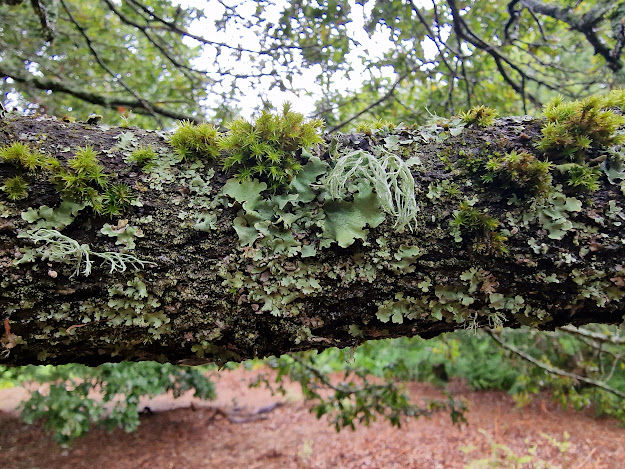
Shade is not a failed version of a sunny border. It has its own palette: broad leaves, fern fronds, moss, bark, pale flowers and the brief shafts of light that move across them.
That makes it one of the most naturally Cottage Goth parts of a garden.
Read the shade before buying plants
Deep shade under evergreen trees is different from bright shade beside a wall, and both differ from the dappled light beneath deciduous trees. Watch where direct sun reaches in spring and summer.
Soil moisture matters just as much. Dry shade under mature trees is a much harder condition than damp woodland-edge soil.
Build from foliage first
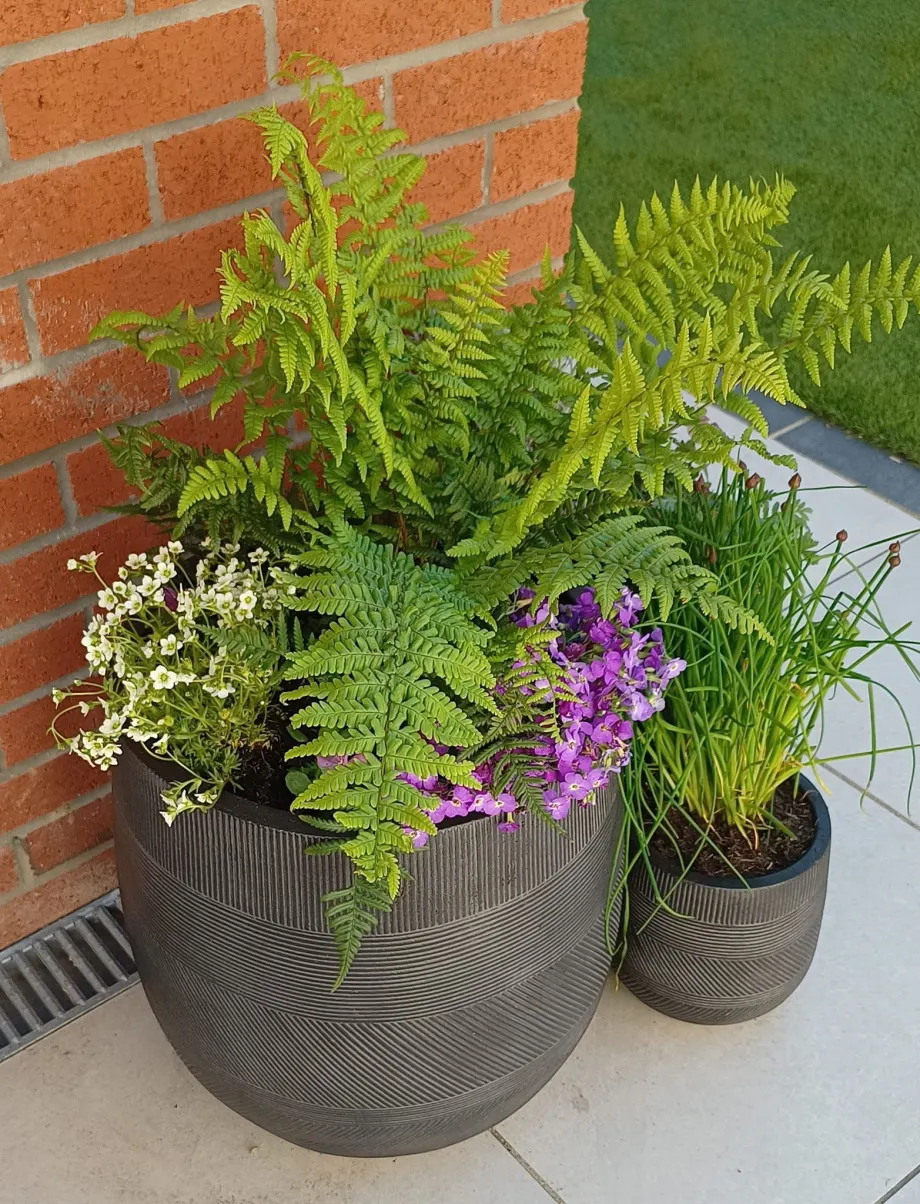
Ferns, hostas, epimedium, hellebores and shade-tolerant grasses give structure long after individual flowers finish. Combine different leaf sizes and surfaces so green does not become visually flat.
Glossy leaves catch scarce light; matte fern fronds soften it.
Foxgloves make vertical light
Foxglove flowers seem brighter in shade because the surrounding foliage is darker. They are biennial or short-lived perennial plants that can seed themselves into woodland edges when conditions suit.
Remember that foxglove is toxic if ingested; site it thoughtfully around children and pets.

Leaf mould is both useful and visually right
Deciduous leaves can be gathered and rotted into leaf mould, an excellent soil conditioner for woodland-style planting. Leaving some leaf litter beneath shrubs also gives invertebrates shelter.
Do not smother small evergreen plants or paths, but there is no need for every shaded bed to be stripped bare each autumn.
Paths make the darkness inviting
A narrow gravel, bark or old-stone path gives the eye somewhere to go and prevents a shade garden reading as an inaccessible thicket.
Let plants soften the edges. The path should look maintained enough to use and loose enough to belong among the planting.
Moss is welcome where conditions already suit it
Moss likes moisture, shade and stable surfaces. Trying to force it onto a hot dry wall is futile, but where it appears naturally it can make stone, timber and soil feel older because it literally records the microclimate.
Add flowers as punctuation
Wood anemones, primroses, foxgloves, hellebores and other shade-tolerant flowers are strongest when they appear through a framework of leaves rather than attempting to imitate a sunny herbaceous border.