Mosses and lichens often appear as shorthand for age. Close attention reveals bryophytes, fungi and photosynthetic partners living on particular bark, stone and soil.
Mosses are bryophytes. Lichens are something different: the British Lichen Society describes a lichen as a stable association between a fungus and one or more photosynthetic partners, usually algae and sometimes cyanobacteria.
Moss is not one plant
Britain has hundreds of bryophyte species. Even the British Bryological Society's field guide covers more than 700 mosses and liverworts, which is a useful warning against calling every green cushion “moss” and moving on.
Look at leaf shape, growth form, moisture and the surface it is growing on.
Lichen is a partnership
The lichen fungus builds the visible structure, while the photosynthetic partner supplies sugars. That makes lichen neither simply a plant nor simply the fungus you see named in a field guide.
Forms range from flat crusts to leafy lobes and branching, shrubby structures.
Old surfaces create more opportunities
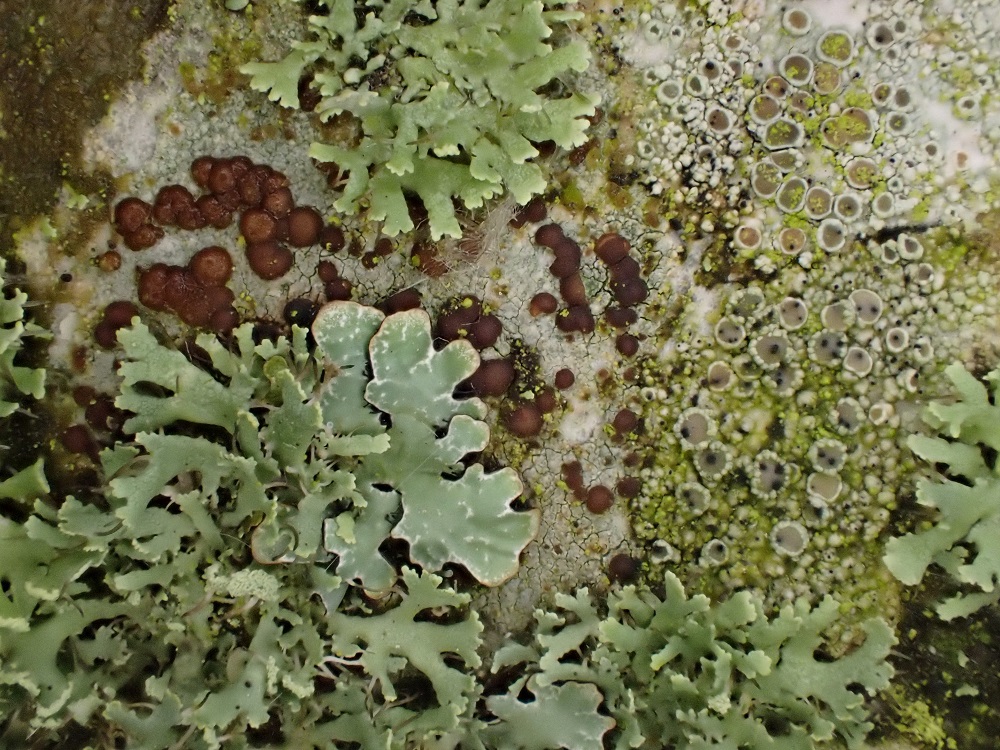
The British Lichen Society notes that gardens can support many lichens because they contain numerous surfaces and microhabitats; older trees and structures can carry especially notable communities.
Stone walls, old fruit trees, timber, roof tiles and undisturbed bark all create different conditions.
Do not scrub age away automatically
Moss or lichen can sometimes need management on paths, roofs or masonry for safety and maintenance reasons, but an old wall does not have to be pressure-washed into visual newness simply because something is growing on it.
Understand the material and the maintenance issue first.
Photograph at their scale
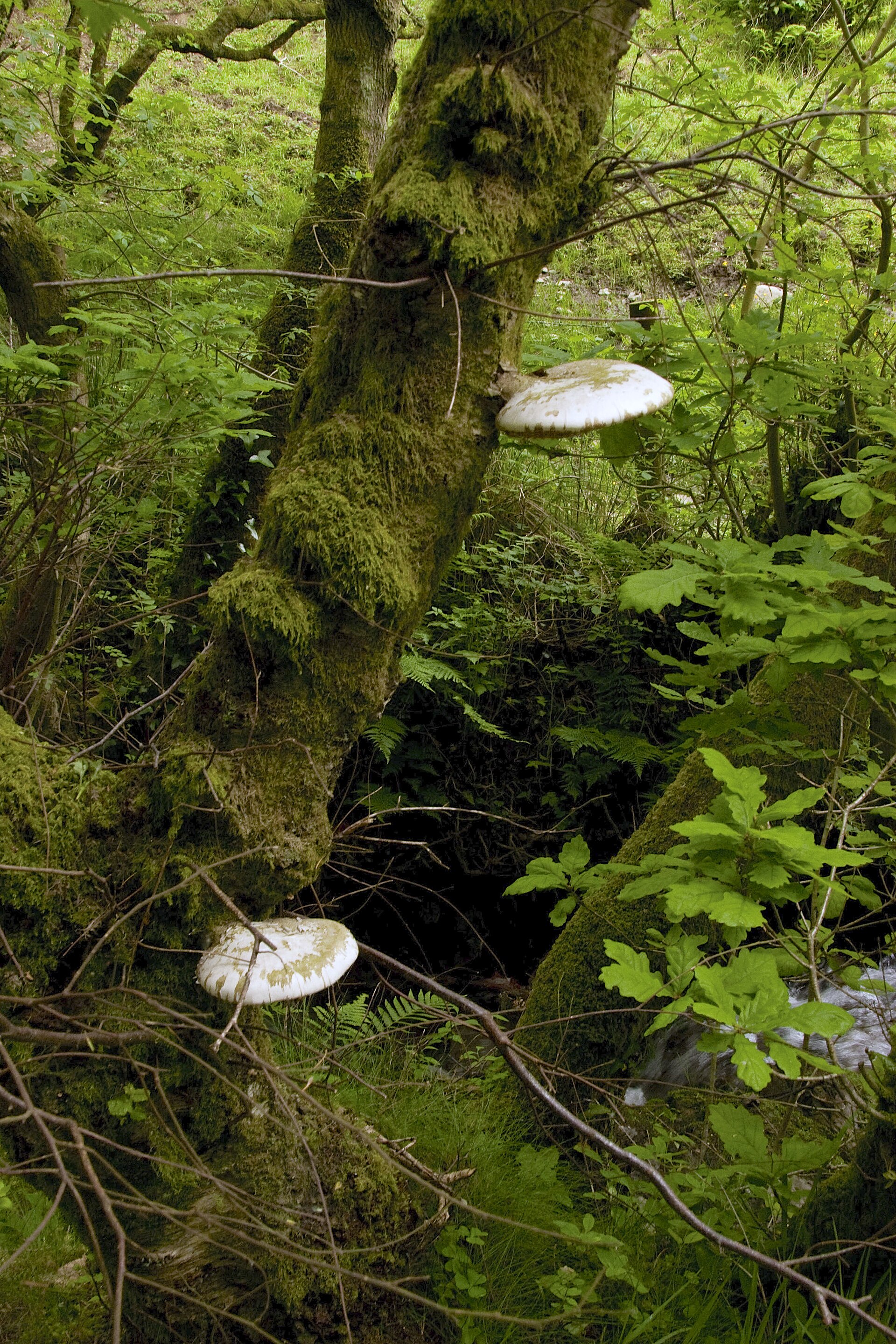
A phone held close to bark or stone reveals structure that disappears in a wide garden photograph. Side light after rain is particularly good because wet surfaces deepen colour and tiny leaves catch highlights.
Do not peel specimens from old walls just to arrange them for photographs.
Let the garden provide microhabitats
Retain some mature bark, shaded stone, logs and damp corners where they are safe. Avoid painting or sealing every old surface unnecessarily. Different aspects and materials will develop their own communities over time.