Water is one of the easiest ways to make a garden genuinely more alive. A pond brings reflection and darkness into the visual language, but its more important job is habitat: amphibians breed in still water, insects emerge from it, birds drink from it and bats may feed above it.
The RHS recommends a pond with at least one shallowly sloping side so frogs, toads, newts and other animals can move safely between water and land.
Common frogs are garden regulars in much of Britain
Common frogs vary in colour from greenish through brown and can show a dark mask behind the eye. They spend much of the year on land and return to water to breed.
Do not assume every frog-like amphibian is the same species. Location, skin, gait, eye and breeding material all help identification.
Toads are more terrestrial than the stereotype suggests
Adult common toads spend much of their time on land and usually walk rather than make the long leaps associated with frogs. They return to water to breed.
Distribution varies geographically, so use local records rather than assuming every British amphibian occurs everywhere in the British Isles.
.jpg)
Build an exit before thinking about ornaments
A shallow beach, sloping shelf or rough ramp lets small animals leave the water. Steep smooth-sided containers can become traps.
Add submerged and emergent plants for cover, but leave some open water. Do not line the entire edge with inaccessible vertical stone.
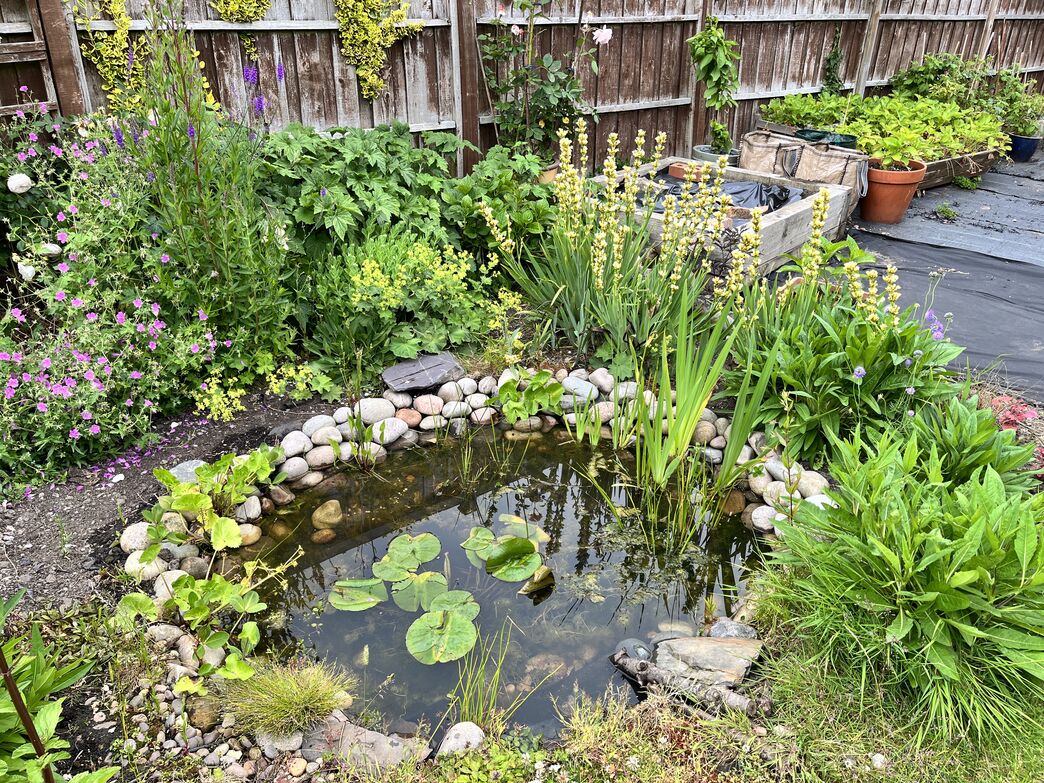
Surround the pond with places to hide
Logs, stones, leaf litter, dense groundcover and longer grass give amphibians damp shelter when they are out of the water. Avoid slug pellets and pesticides that reduce prey or harm garden wildlife.
A dark, untidy pond edge is therefore aesthetically convincing because the useful habitat is visually complex.
Let the water find its own life
Use rainwater to top up where possible and allow colonisation naturally. Transferring animals or pond water between sites can spread disease and invasive species.
Fish are generally a poor fit for a small wildlife pond because they may eat eggs, tadpoles and aquatic invertebrates.
_in_pond.jpg)
Watch in spring and after rain
Frogspawn, toad spawn, tadpoles and calling adults make spring the obvious season, but damp evenings later in the year can reveal adults moving through beds and paths.
Use a torch sparingly and do not handle animals unless necessary for their safety.