The red-and-white toadstool is only a narrow introduction to fungi. British woods also hold brackets, crusts, jellies, waxcaps and many other fruiting bodies.
The Woodland Trust estimates around 15,000 fungal species in the UK. The visible mushroom is only the fruiting body; much of the organism exists as microscopic threads, the hyphae, forming a mycelial network through soil, wood or other material.
The mushroom is only the visible event
Fruiting bodies appear when conditions suit reproduction. That is why a patch of woodland can look fungus-free for much of the year and suddenly produce caps after rain and cooler weather.
Dead wood is a whole landscape
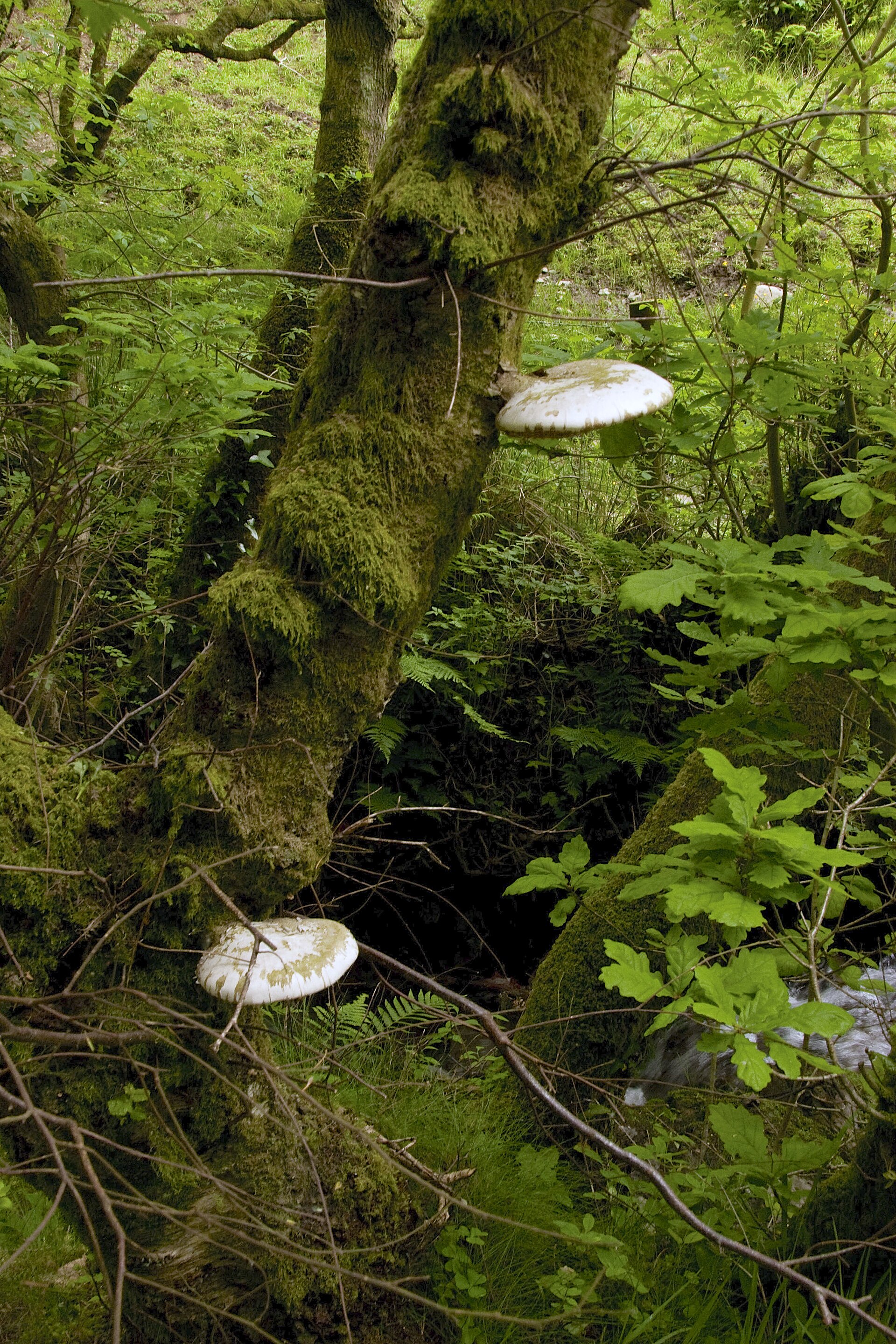
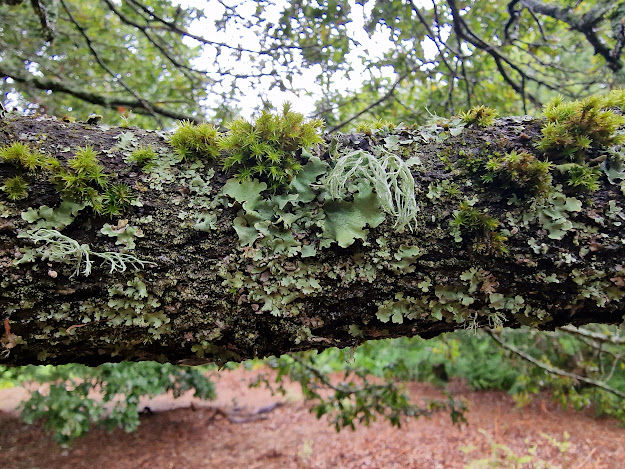
Bracket fungi, crusts, jelly fungi and small caps use dead or dying wood in different ways. Leave safe deadwood where practical in a garden or woodland edge; decomposition is habitat, not simply mess.
The Woodland Trust's bracket guide includes turkeytail, beefsteak fungus and chicken of the woods among common British examples.
Colour is much broader than brown
Amethyst deceivers can be purple, waxcaps vivid, jelly fungi yellow or translucent, and bracket fungi banded in several colours.

Do not identify food from an aesthetic guide
Some fungi are seriously poisonous. The Woodland Trust explicitly warns that its identification guide should not be used to decide what is safe to eat, and this page should not be used that way either.
Photograph, note substrate and habitat, and use specialist field guides or local recording groups if you want to identify a specimen properly.
A garden can make room for fungi without cultivating mushrooms
Keep some deadwood, avoid sterilising every patch of soil, mulch with organic material and allow leaf litter in suitable corners. Fungi will arrive according to substrate, moisture, plants and local spores.
Trying to install decorative mushrooms is less interesting than giving decomposition somewhere to happen.