A hedge is one of the strongest pieces of Cottage Goth garden structure because it is useful before it is aesthetic. It marks a boundary, filters wind, holds nesting cover, flowers, fruits and becomes a dark line through winter.
The RHS recommends mixed native hedges as particularly valuable for wildlife, with plants such as hawthorn, field maple, blackthorn, beech, hornbeam and holly, and climbers including rose and honeysuckle adding shelter and food.
Hawthorn gives the classic hedge shape
Hawthorn makes dense twiggy growth, white or pale-pink spring flowers and red haws later in the year. It tolerates clipping but also looks good allowed to loosen slightly between cuts.
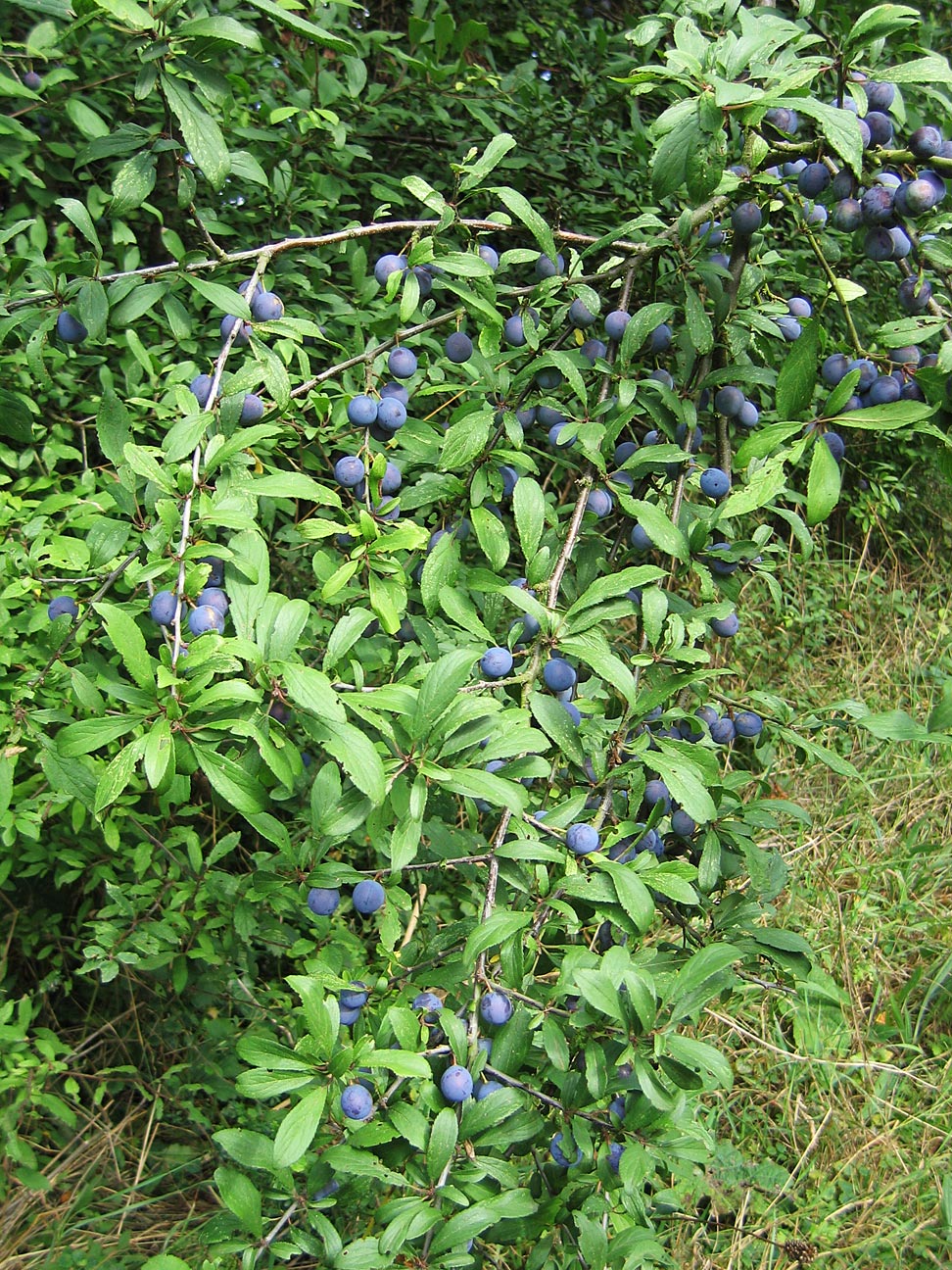
Blackthorn flowers before the leaves
Blackthorn's white blossom arrives early on dark thorny stems, followed later by blue-black sloes. Its habit is denser and more defensive than many ornamental shrubs, which is part of both its usefulness and its visual character.
It suckers, so give it room and understand how it will behave before planting it in a tiny border.

Mix species rather than making a botanical checklist
A mixed hedge extends flowering and fruiting times. Hawthorn, blackthorn, dog rose, guelder rose, field maple, hazel and holly can each contribute different structure and food.
Choose according to soil, exposure, available width and local conditions rather than trying to fit every native hedge plant into one line.

Let climbers use the hedge
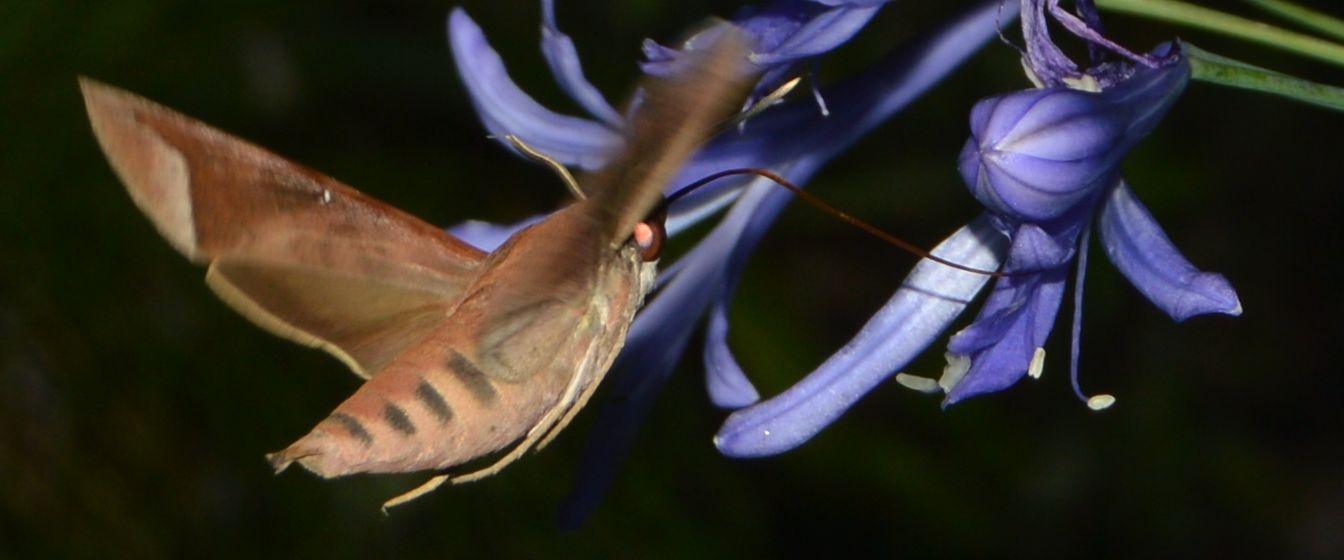
Honeysuckle and wild rose can add scent and flowers; ivy provides evergreen cover and late nectar. The RHS notes that ivy does not harm a healthy hedge, though it can exploit one that is already weak and sparse.
Prune with wildlife in mind
Avoid disturbing active nests. Timing and frequency depend on species and the effect required; the RHS generally recommends late-summer trimming for deciduous hedges, with renovation handled separately.
Not every hedge needs to be clipped into a perfect rectangle. A slightly looser top and base can carry more flower, fruit and shelter.
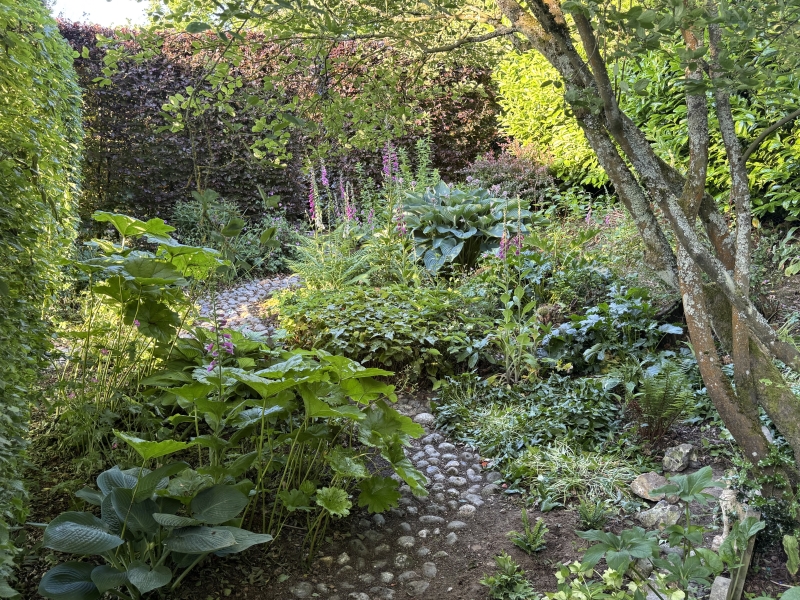
The base matters as much as the top
Longer grass, leaf litter and shade-tolerant plants at the hedge foot turn a boundary into a woodland edge. That layered transition is useful for invertebrates and visually much richer than bare soil beneath clipped stems.