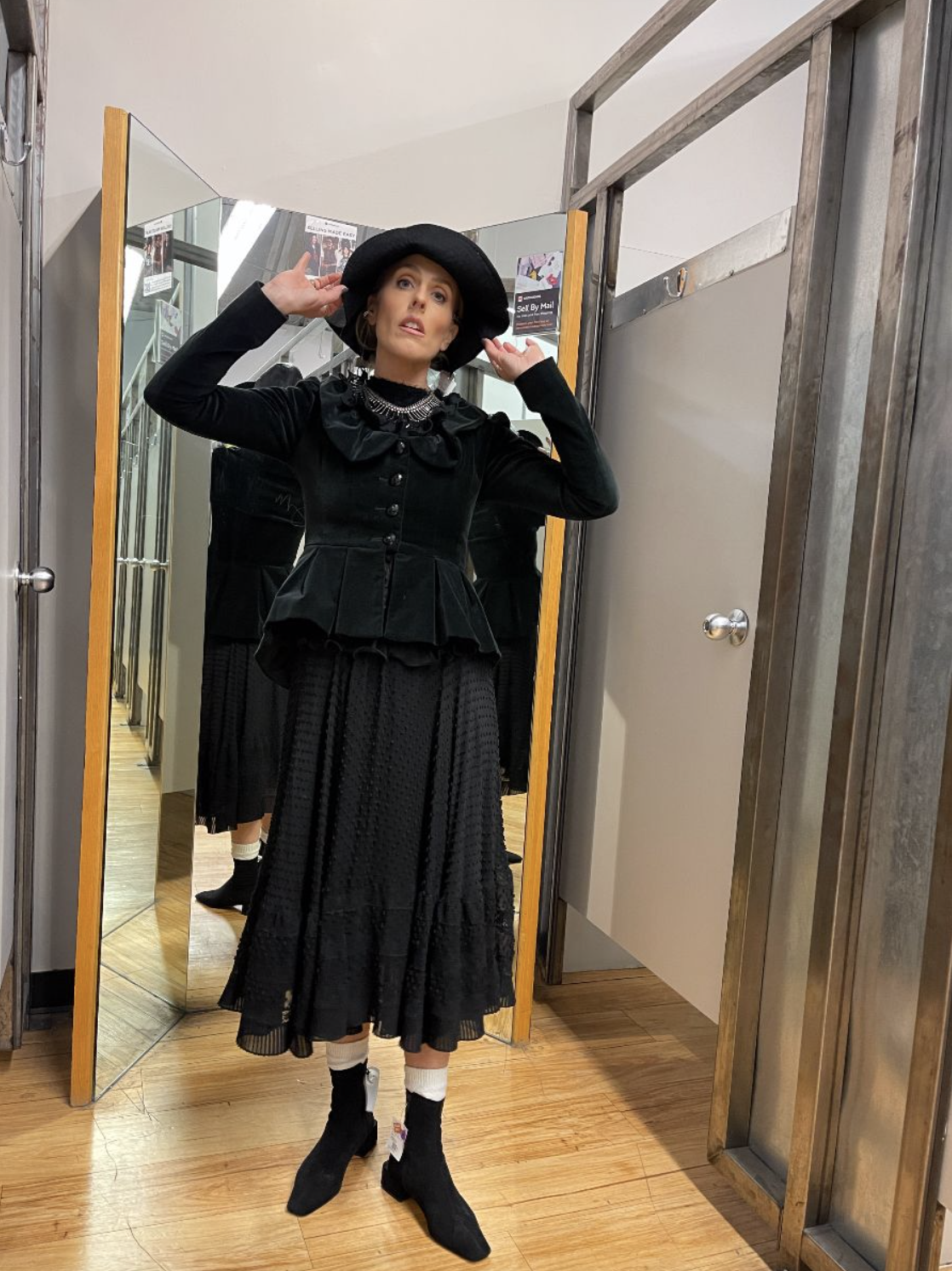
Cottage Goth is easier to see in a wardrobe than to define in a shopping category. A wardrobe can begin with a long skirt, a worn cardigan, boots, dark florals, an old coat and silver jewellery gathered from several places.
The trick is the mix: something romantic, something ordinary, something with texture, something that looks better after it has been worn.

Build outward from a strong garment
It is much easier to dress around one strong garment than to make every item announce the aesthetic.
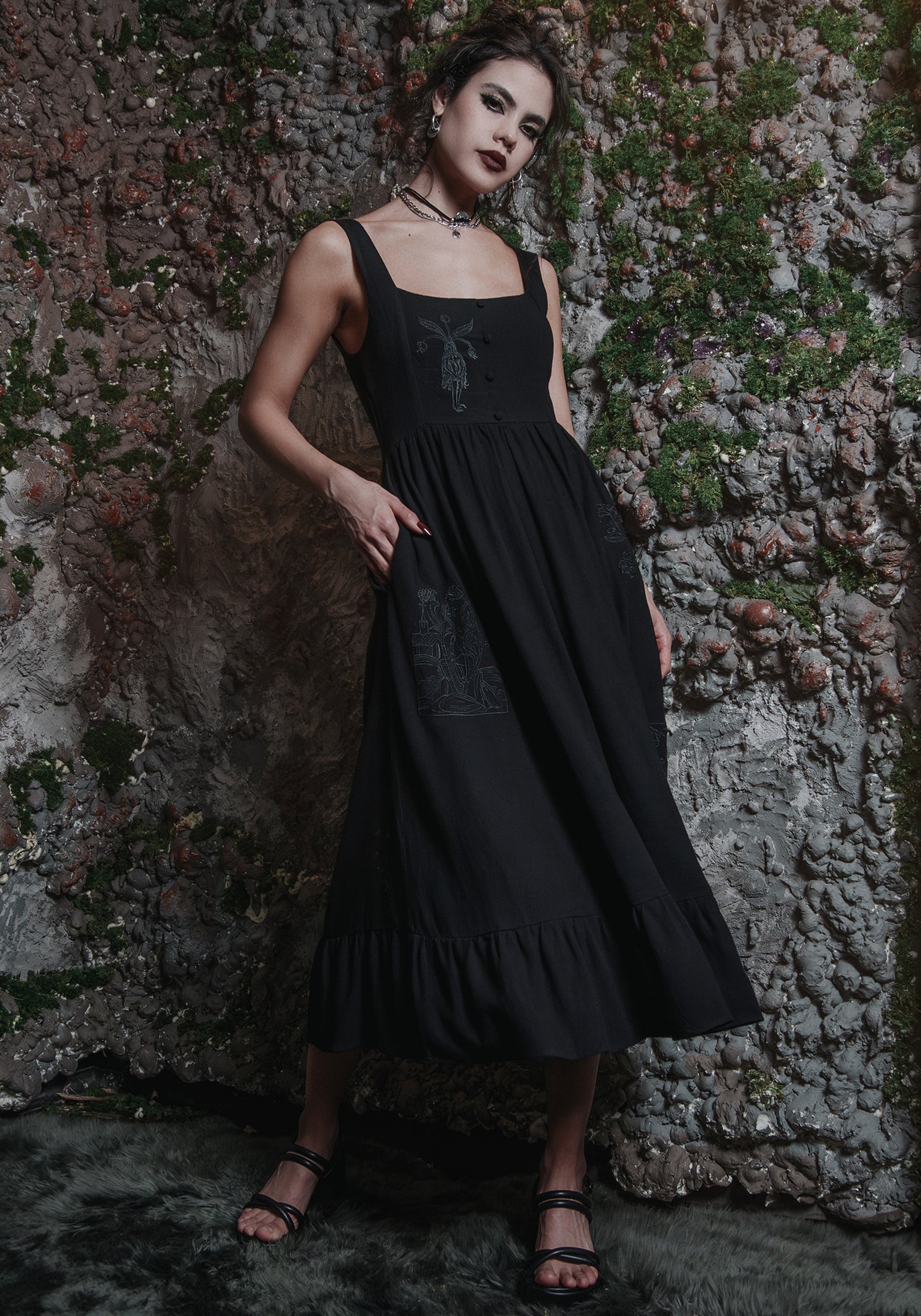
That might be a black linen dress, a dark floral skirt, an embroidered blouse, a long overdress or a heavy cardigan. Use its silhouette and colour as the centre, then add familiar boots, a plain knit, a belt or a coat you already own.
Black linen dress + boots + old silver jewellery + wool coat.
Long dark skirt + cream blouse + chunky cardigan + leather belt.
Overdress + plain base layer + boots + weatherproof coat.
Texture stops black becoming flat
Black works especially well when the materials are visibly different. Linen beside wool, velvet beside leather, lace beside a rough knit, polished silver against a matte blouse.
A wardrobe made from five smooth black synthetic fabrics can look flatter than one built from charcoal wool, faded black cotton, brown leather and a cream linen shirt.
Look closely at the fabric before buying. Fibre and weight tell you how a garment is likely to hang, crease and handle repeated wear; mood-heavy styling copy does not.
Dark florals bridge the two halves
Botanical prints connect cottage and goth through subject, colour and pattern.
Look for flowers on black, brown, aubergine, bottle green or charcoal grounds. Small antique-looking prints feel different from large bright tropical flowers; faded florals sit particularly well beside boots, knitwear and old jewellery.
Embroidery can do the same job more quietly.
Make room for trousers
The aesthetic photographs beautifully in long dresses, so image searches can make it look as though everybody needs one. They do not.
A long skirt works with ordinary knitwear. A dark dress can take a cardigan and boots. Trousers in corduroy, wool, black denim or brushed cotton belong just as comfortably when the rest of the outfit has the right texture and shape.
The silhouette matters more than performing femininity.
Knitwear makes it wearable
Heavy cardigans, textured jumpers, knitted waistcoats and old wool layers make these clothes comfortable in British weather.
Moss, peat, charcoal, cream, rust and burgundy work especially well with black. Visible texture matters: cables, ribbing, Donegal flecks, brushed wool and a slightly battered second-hand cardigan all add depth.
Boots should be able to leave the house
Leather lace-up boots, Chelsea boots, walking-inspired boots and simple knee-high pairs all work.
A little hardware, floral embroidery or an unusual leather finish can help, but they still need to survive wet pavements, grass and an afternoon on your feet. Cottage Goth should not require indoor-only footwear.

Jewellery can carry the strangeness
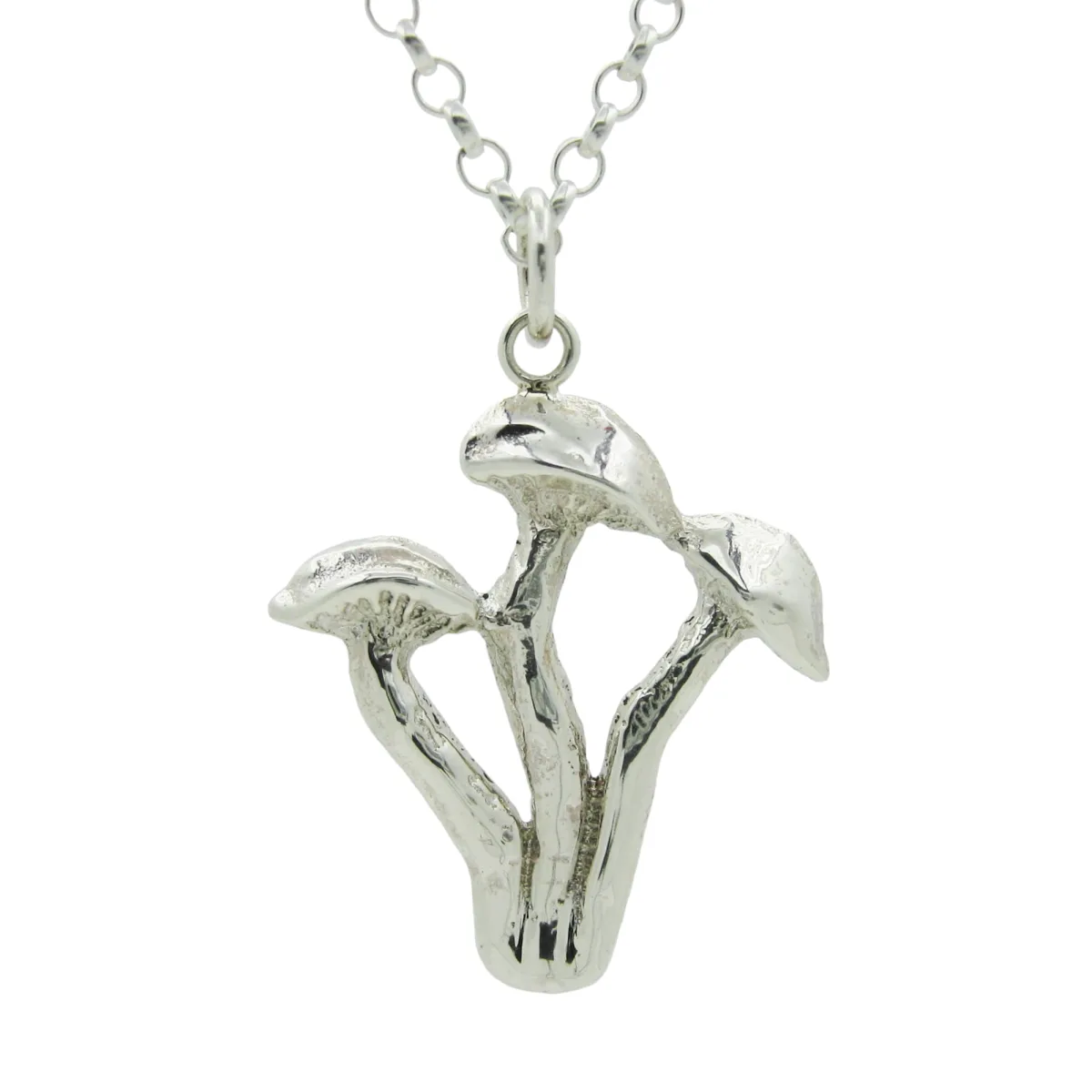
Simple clothes leave room for more detailed jewellery: a silver moth, raven, botanical pendant, locket, signet ring or old brooch.
The strongest pieces carry their interest in the material itself: oxidised silver, carved jet, old lockets, engraved metal, marcasite and natural forms.
See the Cottage Goth jewellery guide for current examples.
Outerwear decides whether the wardrobe survives winter
A wool coat, waxed jacket, old tweed, long cardigan or heavy field coat can sit over almost everything above.
This is also a good place to buy second-hand. Coats that already have softened wool, rubbed buttons or a little history often look more convincing than new garments distressed to imitate it.
Second-hand first makes sense here
Charity shops, vintage sellers and resale platforms are particularly good for wool coats, cardigans, linen shirts, leather belts, boots, brooches and odd one-off skirts.
Search with garment and material terms: black linen dress, dark floral skirt, wool cardigan, vintage silver brooch, brown leather lace-up boots.
That approach produces a broader, less costume-heavy wardrobe and often better materials for the money.
Three starting outfits
Everyday: dark floral skirt, cream knit, leather boots, cardigan, silver pendant.
Darker: black linen dress, wool coat, lace-up boots, old locket.
Less dress-focused: charcoal trousers, loose cream shirt, dark cardigan, brown boots, silver ring or brooch.
Several shared pieces let those three outfits grow into the beginning of a wardrobe.