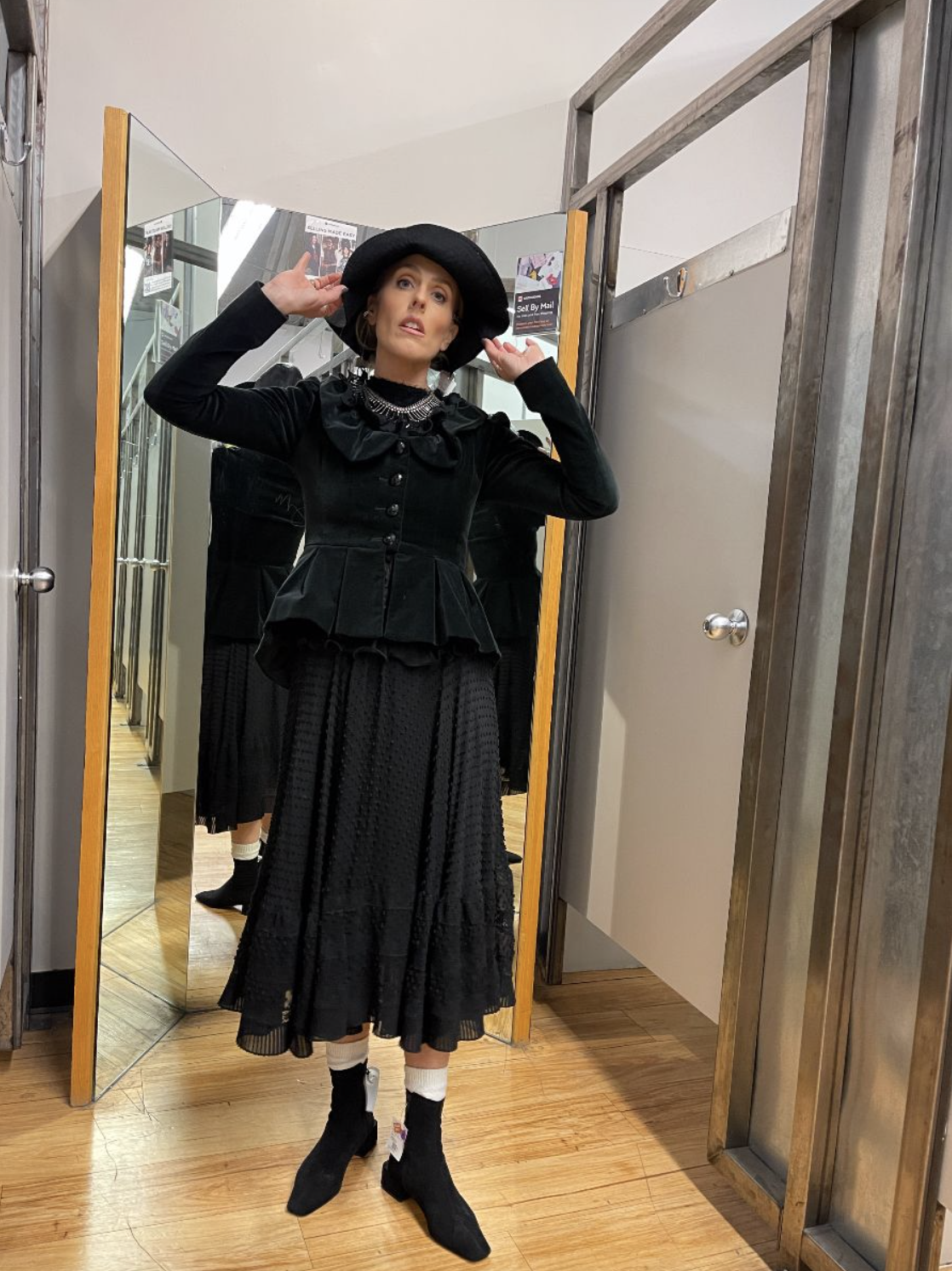
A long skirt, linen dress or dark wool trouser becomes much less delicate with boots that can cope with wet pavements, grass and mud.
The best choices are often not marketed as Gothic at all.
Plain lace-up boots do most of the work
Black or dark brown leather, an ankle-supporting upper and a modest heel are enough. The laces and eyelets provide visual detail without needing buckles, chains or exaggerated platforms.
Brown can make black clothing feel more rural
Dark brown boots under a black skirt or dress pull the palette towards earth and timber. They also show scuffs and patina in a way that can become part of the look rather than a defect.

Floral detail works when the boot still looks like a boot
Dr. Martens' Vonda 1460 uses rose embroidery on the familiar 1460 shape. That is a useful formula: a dependable silhouette carrying one romantic detail.
The same principle applies to botanical embossing or unusual laces. Decoration is strongest when the construction remains credible.

Vintage shapes are useful references
Edwardian and early twentieth-century lace-up boots often have narrow shafts, close eyelets and modest shaped heels. Modern reproductions can bring that line into an everyday wardrobe without requiring actual antique footwear.

Fit matters more than the photograph
Check toe room, width, heel slip and whether the shaft rubs. Leather can soften but a fundamentally wrong size rarely becomes right.
If a boot is intended for long walks, look at sole grip and cushioning as seriously as the upper. A beautiful smooth sole on wet stone is a poor Cottage Goth experience.
Let wear happen naturally
Condition leather, dry wet boots slowly and repair soles before they fail. Scuffs, creases and softened leather will arrive through ordinary wear, recording where the boots have actually been.
Shoes can work too
Mary Janes, sturdy loafers and lace-up shoes can work with socks, tights and long skirts, especially indoors or in warmer weather. The key is still proportion and material: a substantial sole and old-fashioned line generally sit better than a very sleek office shoe.